 India
India
 Netherlands
 Singapore


South Indian Food for Gut Health: Foods to Try for Better Digestion



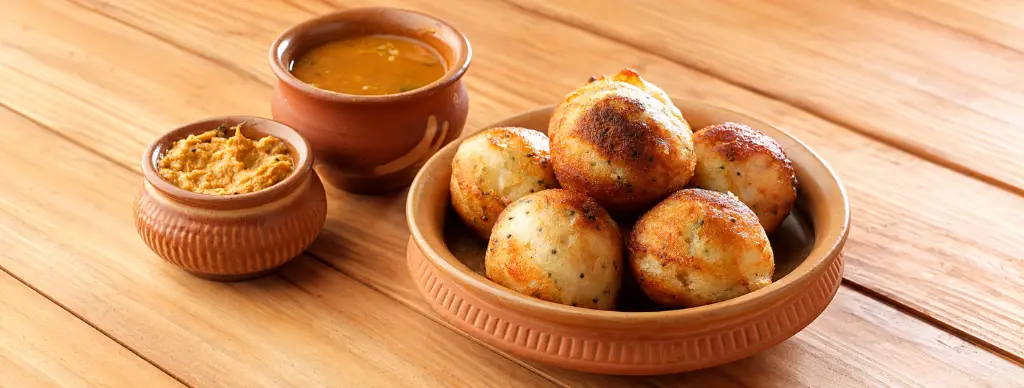
Dosa and idli may get most of the attention, but that same fermented batter can be used to make something very different. Cook it in a pan with small, rounded moulds, and you have paniyaram, a popular South Indian snack with a lightly crisp exterior and a soft centre.
So what is Paniyaram, and where does it come from? This small, bite-sized preparation has deep roots in Tamil Nadu, but similar versions are found in many Indian states. Learn more about the ingredients, cooking method, and regional variations in this blog that are worth a look.
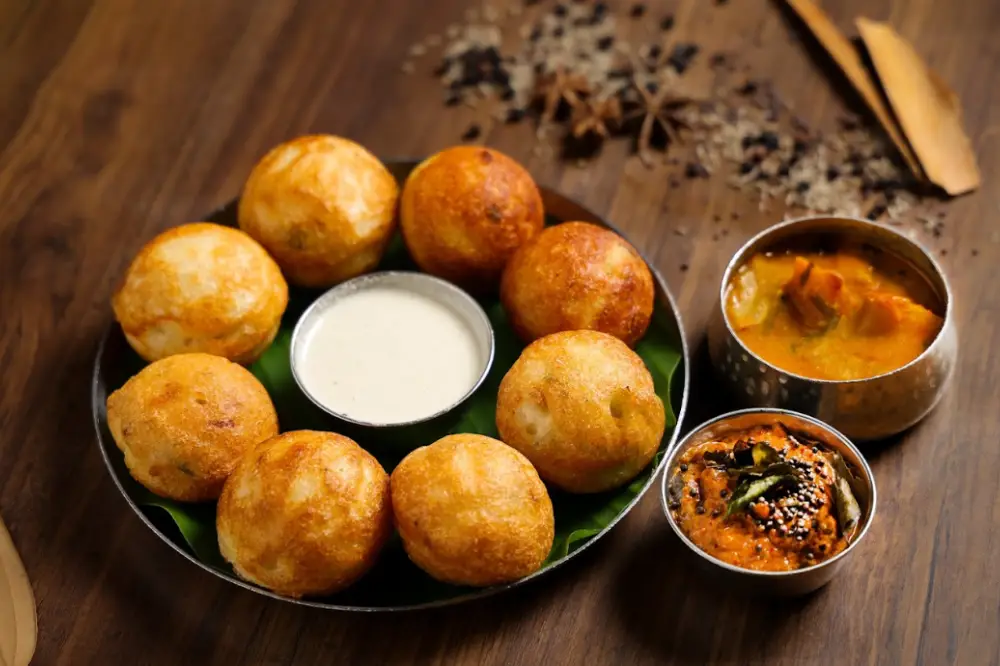
Paniyaram is a small round snack made traditionally with fermented rice and urad dal batter. It is prepared in a special pan with several rounded cavities, with a little oil or ghee added to each.
Basically, paniyaram is made from the same ingredients as idli and dosa, but the way it is cooked gives it a different texture.
Paniyaram is generally eaten as a breakfast or evening snack. Savoury varieties are usually served with chutney or sambar, while sweet varieties may be eaten on their own.
Paniyaram is closely associated with Tamil Nadu, especially the Chettinad region, where both savoury and sweet varieties are prepared in traditional home cooking.
However, its precise place of origin is difficult to determine. In southern India, fermented rice-and-lentil batters have long been a staple, with similar cooking methods developing in neighbouring regions.
‘Kuzhi’ in ‘Kuzhi paniyaram’ means ‘hollow’ or ‘cavity’ in Tamil. It refers to a specifically shaped pan which is used to cook the dish.
The cooking methods are alike, but the regional recipes possess their own identity. These regional differences illustrate the ways in which South Indian cuisine has developed distinct ways of preparing familiar ingredients.
| Region | Local Name | Regional Characteristics |
|---|---|---|
| Tamil Nadu | Paniyaram | It is often made with fermented batter, onions, chillies, and curry leaves. |
| Karnataka | Paddu or Guliyappa | It is usually served with chutney, with seasoning varying between different households. |
| Andhra Pradesh and Telangana | Gunta Ponganalu | It is commonly prepared with onions, chillies, ginger, and other savoury ingredients. |
| Maharashtra | Appe | A similar mould-cooked preparation which is enjoyed as breakfast or a snack. |
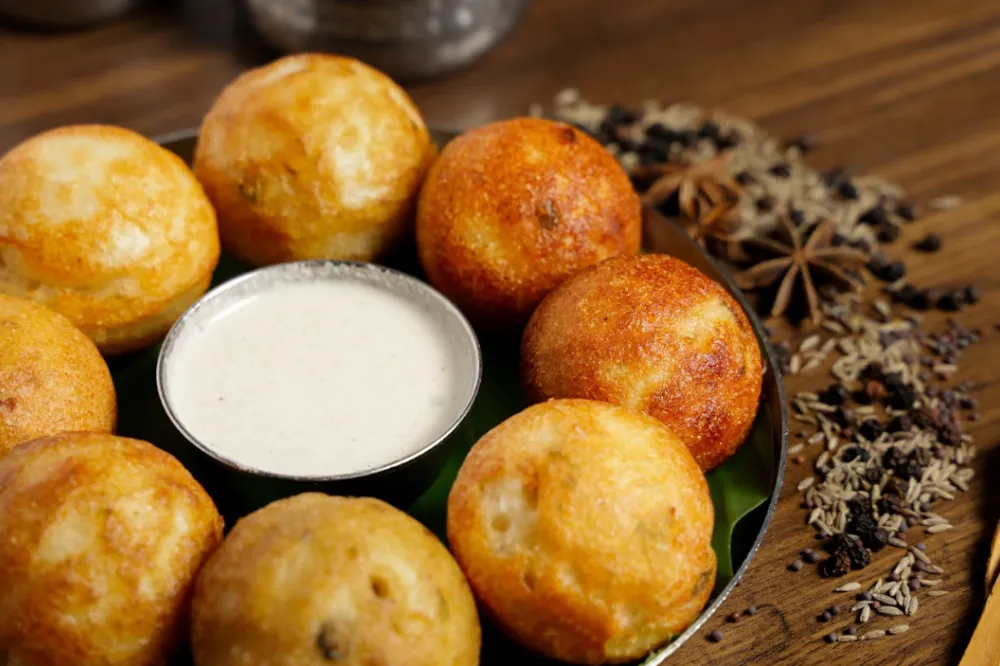
The ingredients for the traditional recipe are usually the ingredients used to make idli and dosa batter.
The other ingredients add the flavour and texture to the savoury paniyaram. These can be mustard seeds, onions, green chillies, ginger, curry leaves, chana dal and coriander leaves. Some households also add grated coconut or finely chopped vegetables.
The ingredients change depending on the recipe, making this one of the more adaptable traditional South Indian dishes.
To learn how to make paniyaram, you should first learn how to make fermented batter.
A useful feature of the paniyaram dish is that it can also be prepared with leftover idli or dosa batter. This saves the time needed to prepare a fresh batch, provided the batter has been stored properly.
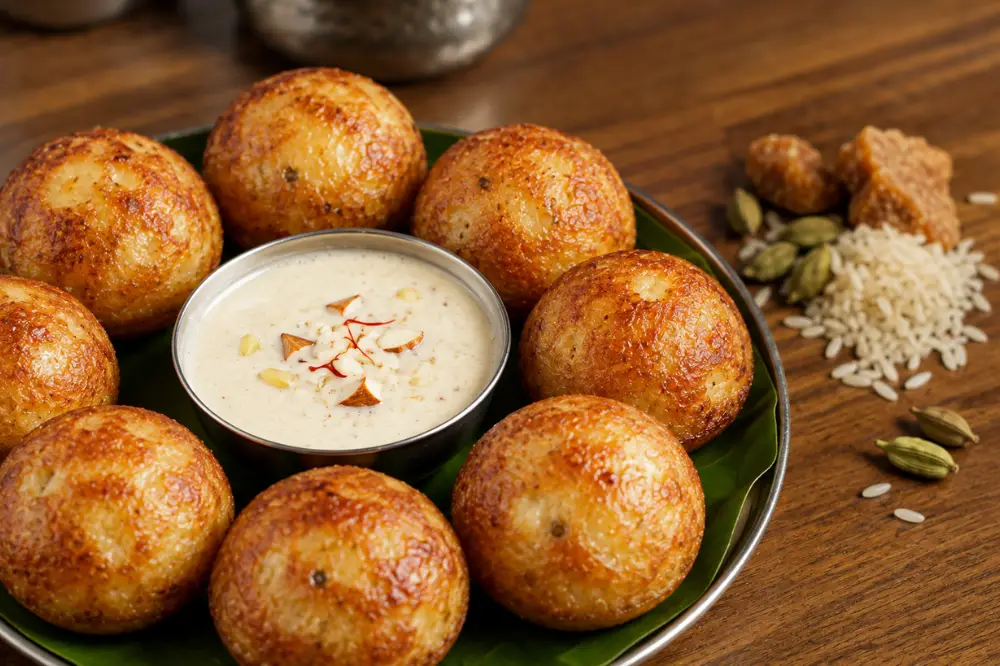
The same cooking process can be used to make a variety of different types of paniyaram, which is why it is so popular.
Kara paniyaram is the spicy version and is generally made with onions, green chillies, ginger, and curry leaves.
The seasoning gives flavour to the slightly sour batter. It is normally served hot with coconut chutney, tomato chutney or sambar.
Sweet paniyaram is generally made with jaggery, coconut and cardamom.
Some recipes require banana or ghee. The jaggery adds sweetness and gives a slightly caramelised taste to the outside.
This version has finely chopped vegetables like carrots, cabbage, capsicum, or spinach.
The vegetables get folded into the batter, and then it goes in the pan. Smaller pieces work better as they cook more evenly inside the moulds.
These regional preparations are somewhat similar to Kuzhi paniyaram, but the ingredients and seasonings could be different.
Paddu is well-liked in Karnataka, whereas gunta ponganalu is linked to Andhra Pradesh and Telangana. Both these reflect the local tastes of the known recipes.
To know what paniyaram is is to understand how a simple fermented batter becomes a distinctive snack. Its regional names, different ingredients, and sweet or savoury preparations speak about the variety that is found in traditional South Indian dishes.
At Sagar Ratna, we celebrate the flavours and culinary traditions that set South Indian cuisine apart. Visit us for an authentic South Indian restaurant experience and taste our vegetarian favourites and find the variety of flavours we serve.
Paniyaram and appe are closely related preparations, cooked in pans with rounded hollows. Appe is a name from Maharashtra, and ‘Paniyaram’ is a name from Tamil Nadu. Their batters and seasonings may vary by regional recipe.
Yes, there are some quick recipes that use semolina, curd, and a raising agent instead of the traditional fermented rice-and-lentil batter. These versions can be convenient if there is no prepared batter available. But the taste and texture may differ from the traditional paniyaram.
Paniyaram can form part of a balanced breakfast, depending on its ingredients, portion size, and cooking method. Rice-and-lentil batter provides carbohydrates and some protein, while vegetables can add fibre. The amount of oil or ghee used also affects its nutritional content.
This usually happens because the heat is too high or the batter is too thick. The outside will brown quickly, but the centre needs more time to cook. A moderate heat and a short time with a lid on the pan will help it cook evenly.
Yes, cooked paniyaram can be refrigerated promptly in a covered container and reheated thoroughly before serving. A lightly greased pan can help restore some of its outer texture. Freshly cooked paniyaram generally has the best balance of crispness and softness.

 Instagram
  Facebook
  Twitter