 India
India
 Netherlands
 Singapore


Looking for a Navratri Thali? Try Sagar Ratna’s Special Festive Feast



In This Blog
Just because a meal tastes indulgent, it doesn’t mean you need to feel heavy afterwards. Traditional southern cooking has plenty of options already built into it with fermented batters, lentils, vegetables, curd, and simple preparation methods.
At Sagar Ratna, these familiar dishes make it easier to eat healthy South Indian food and still have a satisfying meal. The key is to know which foods, combinations, and ways of cooking can work better for digestion, not to find one dish that is perfect.
You don’t have to switch to bland meals when you plan to eat gut-friendly foods. A lot of popular dishes can fit naturally into a well-rounded diet if the food preparation, portions, and accompaniments are well handled. Sagar Ratna, particularly, emphasises these.
We’ve got menu choices you know and love to help when you want something lighter, more balanced, and all that without sacrificing flavour.
Here are some gut-friendly, healthy South Indian dishes we recommend:
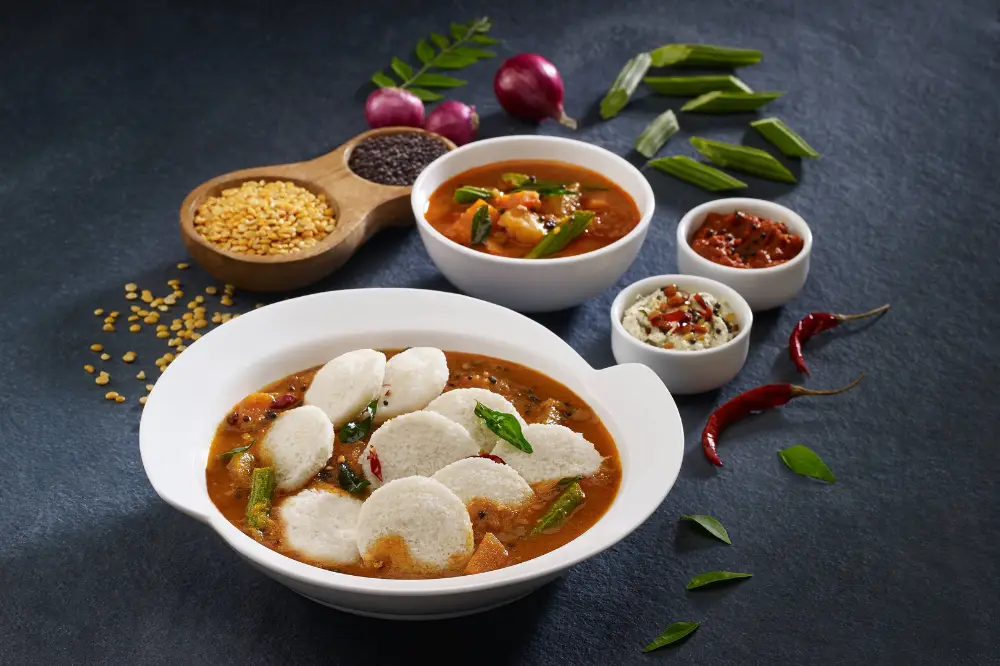
Idli is one of the easiest dishes to go for when you’re looking for a lighter meal. Made from fermented rice and urad dal batter, idli is soft, steamed and light.
Fermentation of the batter before steaming adds a different character to the batter. Steaming keeps the preparation simple and not deep-fried. That combination makes idli a good example of healthy South Indian food.
Here are some ways to add a little more balance to the meal:
Idli is also a good option when you are looking for low-calorie South Indian foods, especially when you compare it with deep-fried alternatives.
A bowl of sambar is a mixture of many useful ingredients. It is a dal-based dish and vegetables, tamarind and spices provide it with variety and flavour.
Lentils and vegetables contain dietary fibre, which is important for normal bowel function. Nutritional content will vary depending on the recipe and vegetables used.
Sambar is good with many dishes and also works well. Pairing it with idli or dosa at Sagar Ratna can help transform a mostly grain-based dish into a more varied meal.
These properties are some of the practical health benefits of eating more lentil and vegetable-based dishes in your daily meals.
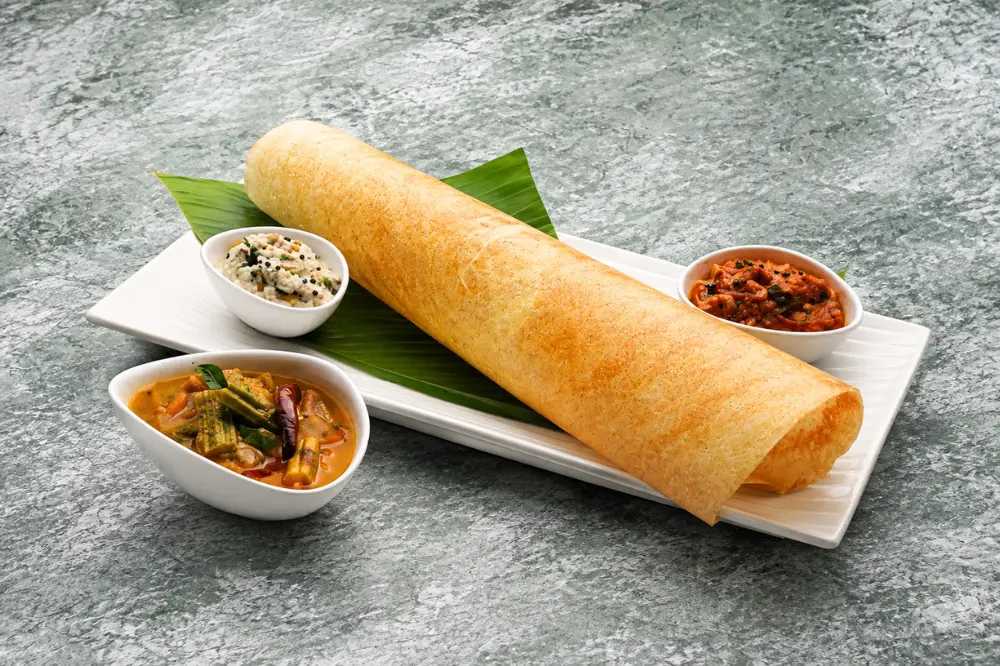
Dosa can definitely fit into a well-rounded diet, but it’s important to choose the type you’re eating.
Traditional dosa batter is made from fermented rice and lentils. But the last meal can become much richer depending on the amount of oil, butter, cheese, or filling added during preparation.
If you want a simple option in a South Indian restaurant, order a plain dosa and watch out for its side dishes.
Pair it with vegetable-loaded sambar and small amounts of chutney. This will give you the flavour and texture of dosa while still keeping the overall meal fairly simple.
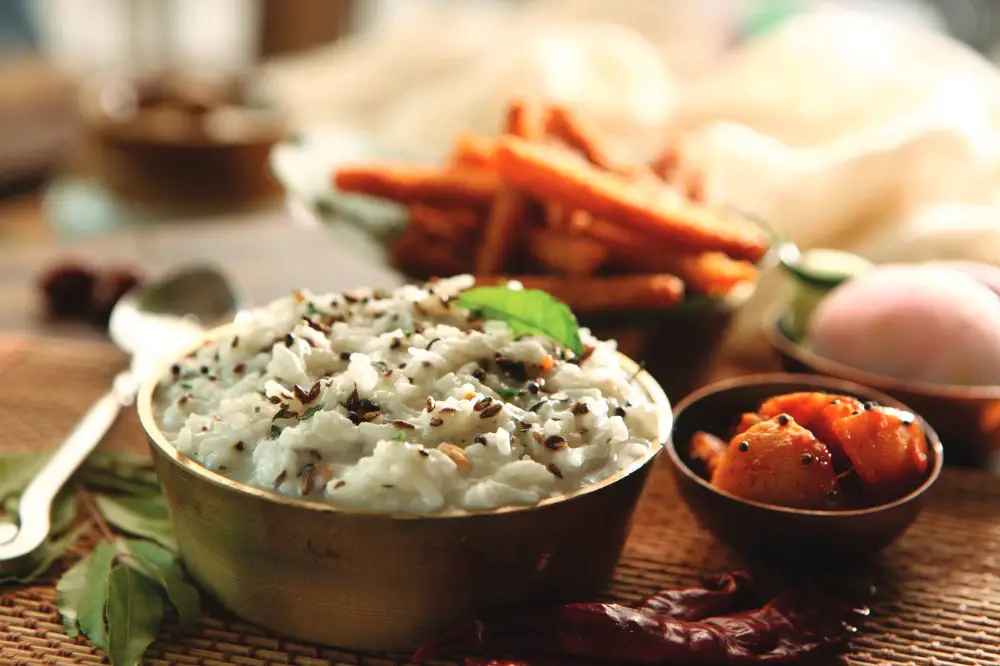
Curd rice is one of those dishes that shows the simplicity of South Indian cuisine. The base is rice and curd, with mustard seeds, curry leaves and other ingredients perhaps added for seasoning.
Curd is a fermented dairy product which contains live cultures of good microorganisms. But the cultures present will vary depending on how the curd has been produced and stored.
Curd rice is a gut-friendly food choice to add to your diet, but portion size still matters because rice is a big part of the dish.
To make your plate more balanced:
Upma is a hearty and warming breakfast or can be a lighter meal. Semolina is usually the base, while mustard seeds, curry leaves, and vegetables add texture and flavour.
Adding carrots, peas, beans and other vegetables adds a variety of healthy ingredients to the dish. The amount of oil you use also determines how light the finished meal will be.
Vegetable upma can be one of the low-calorie South Indian foods to consider when prepared with moderate oil and in a sensible portion.
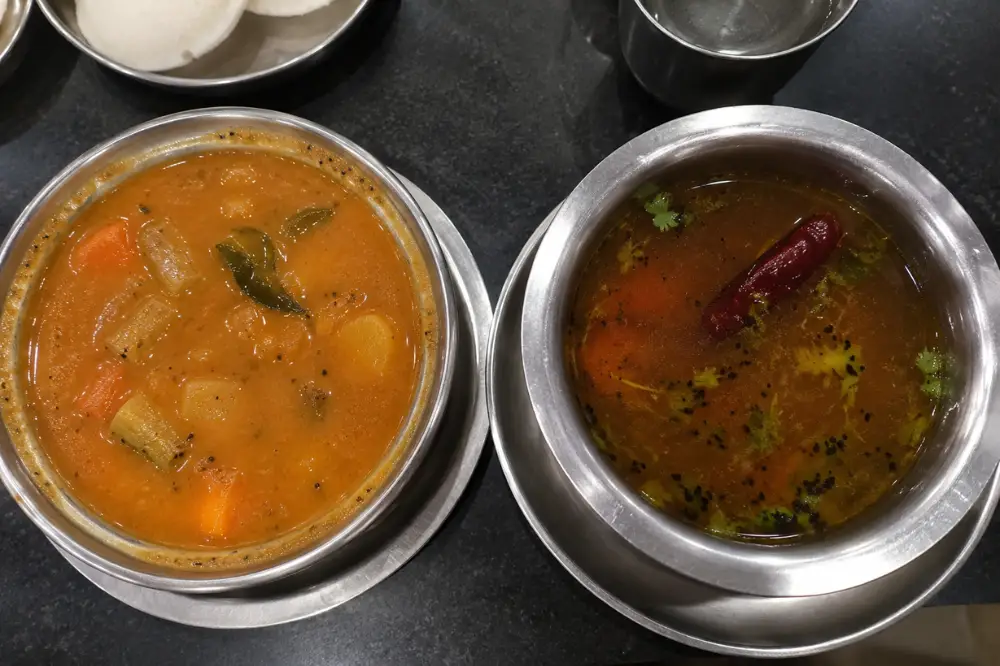
Rasam is light and aromatic and very different from the richer gravies. The recipes vary but usually contain tamarind, tomato, pepper, cumin and curry leaves.
It can be eaten with rice or in a small bowl by itself as a larger meal. Its lighter consistency is useful when you want flavour without adding another particularly rich preparation.
Rasam also shows how South Indian dishes can deliver plenty of flavour with herbs, spices and tangy ingredients instead of relying only on fat-heavy sauces.
A good way to approach South Indian cuisine is to forget the specific dishes for a moment and look at the ingredients which are common to many different recipes.
Some common healthy ingredients are:
The health benefits of South Indian cuisine come from how these foods work together across the whole plate. At Sagar Ratna, you can easily vary and balance your choices with meal options with lentils, vegetables and fermented batters.
Better digestion is shaped by your overall diet and habits, not one supposedly perfect dish. Still, South Indian cuisine gives you plenty of ways to choose gut-friendly food through fermented batters, lentils, vegetables, and other healthy ingredients.
Whether you prefer idli, dosa, sambar or a lighter bowl of rasam, thoughtful combinations matter. The next time you visit a South Indian restaurant such as Sagar Ratna, choose healthy South Indian food that gives you both the flavours you enjoy and the balance your meal needs.
Many South Indian dishes use lentils, vegetables, fermented batters, and simple cooking methods that can be incorporated in a digestion-friendly diet. Idli and other steamed dishes can also be lighter than their fried counterparts. But individual digestion depends on portion size, preparation, and individual tolerance to food.
Some options to look at are idli, sambar, vegetable upma, rasam and curd rice. A more balanced meal may be had by serving lentils and vegetables with steamed or lightly prepared dishes. Adjust to your own tolerance, especially if you are consuming dairy, spicy foods or higher-fibre ingredients.
Lentils, vegetables, curd, whole grains, millets and spices can all add nutritional value to a South Indian meal. These ingredients can contribute fibre, plant protein, vitamins and minerals depending on the dish. Choosing meals with a wider variety of these ingredients can help make the plate more balanced.
For example, start with steamed or plain items such as idli, and mix them with sambar to make the meal more balanced. Or if you are not too hungry, you can have a plain dosa, vegetable upma or a lighter rice dish. Keep fried sides, rich fillings, butter, and heavy toppings moderate to none.
Start by combining a main dish with vegetables, lentils or sambar instead of relying only on rice or batter-based foods. Keep rich chutneys, butter, ghee and fried sides moderate. A balanced plate should feel satisfying without becoming unnecessarily heavy.

 Instagram
  Facebook
  Twitter