 India
India
 Netherlands
 Singapore


South Indian Drinks: Sagar Ratna’s Best Pairings with Classic Dishes



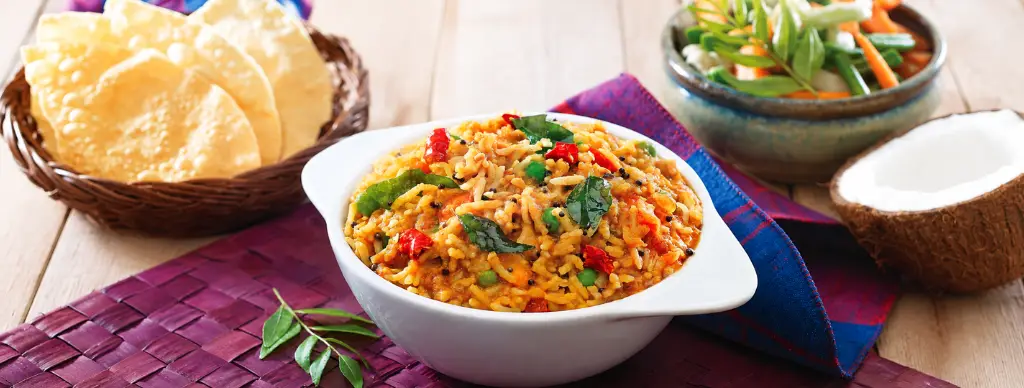
You know there are some dishes that can tell you a lot about their origin through just one serving. Bisi bele bhat, a Karnataka classic, is one such dish that we’ve picked up for this blog.
At Sagar Ratna, we celebrate the regional dishes that give South Indian cuisine its remarkable variety. The traditional bisi bele bhat is prepared with soft rice and lentils cooked with tamarind, jaggery, vegetables, aromatic spices, and a fragrant ghee tempering.
Let’s learn more about this hearty dish, prepared with love at Sagar Ratna.
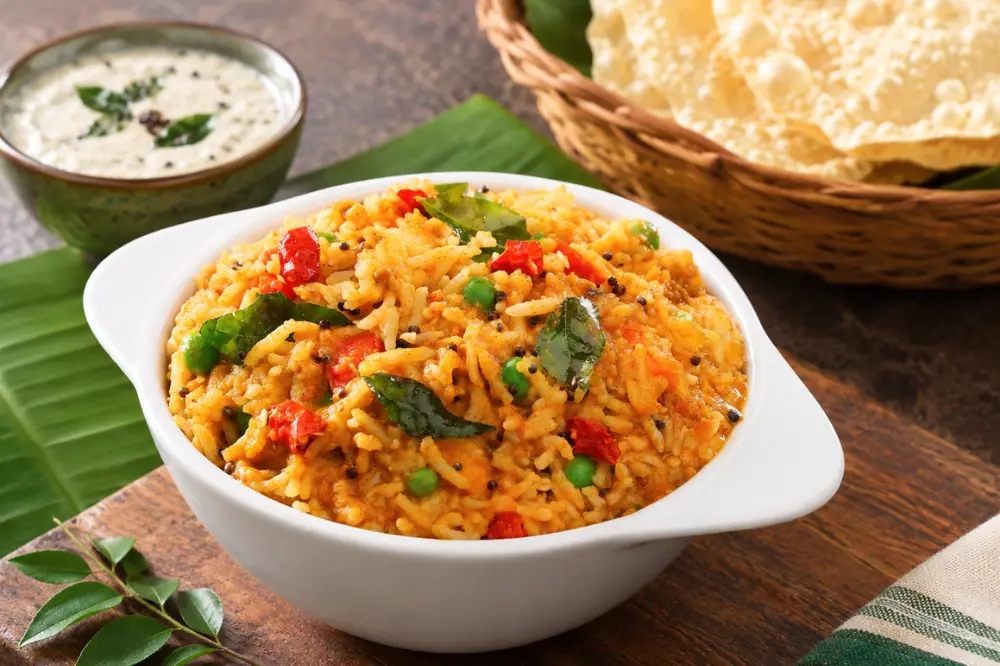
The origin story of bisi bele bhat is closely connected with the royal past of Karnataka. The dish is believed to have come from the royal kitchens of the Mysore Palace, where the recipe was kept a secret among the palace cooks until it eventually spread outside the royal kitchen.
Over time, it made its way into homes and eateries across Karnataka and later other parts of India. It became an everyday comfort food and a dish cooked for festivals, family gatherings, and special occasions.
Its Kannada name tells about its foundation:
All in all, the name literally means “hot lentil rice”.
The story of bisi bele bhat is a fascinating example of how a recipe can travel from the palace kitchens into the common food culture while retaining its regional character.
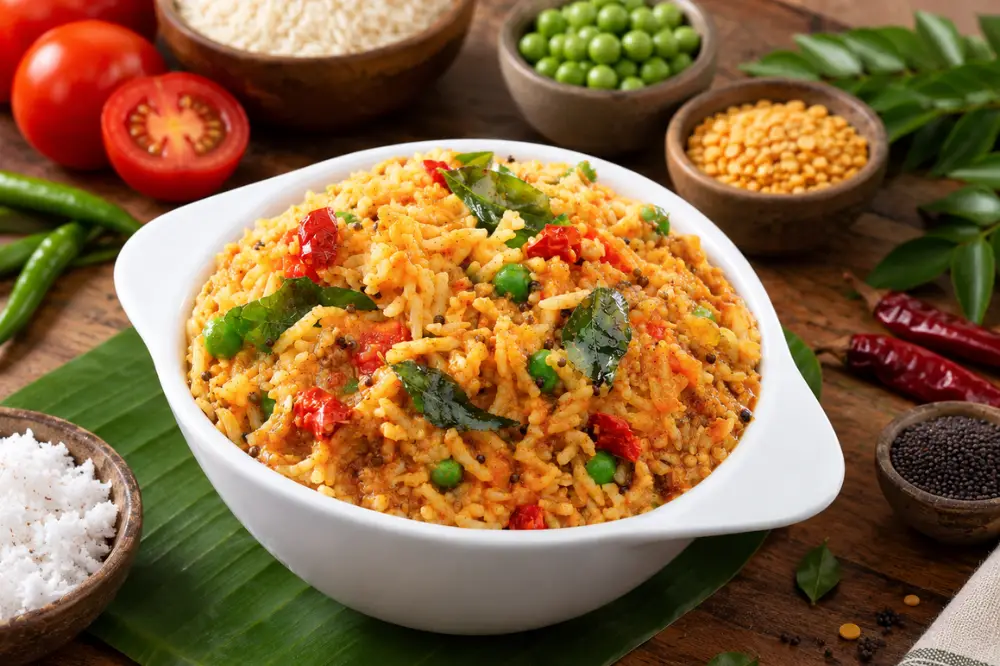
The recipes may vary from home to home, but a few core ingredients give the Bisi Bele Bhat its distinctive character.
The base of the dish is rice and toor dal. Short or medium-grain varieties like Sona Masuri work best, as the rice gets soft while cooking, and the toor dal lends the creamy lentil texture to the dish that it should have.
The older versions of bisi bele bhat might not have had vegetables, but they have become popular in modern recipes.
Typical additions include carrots and French beans, green peas, potatoes, drumsticks, brinjal, capsicum, etc.
The vegetables are usually cooked until tender but still firm enough to contrast with the softer rice and dal.
Tamarind gives the sour note that runs through the dish. A little bit of jaggery balances out that sharpness and rounds out the heat from the spices.
It is not to make the preparation taste sweet. Its hallmark is the balance created by the combination of the two ingredients.
The bisi bele bhat masala is the soul of the recipe. The combination of roasted ingredients adds a depth and aroma that your average sambar powder can’t quite match.
A traditional blend could include:
The ingredients are roasted dry on low to medium heat till aromatic, cooled and ground to a fine powder. What makes bisi bele bhat masala special are ingredients like Marathi moggu and warm spices like cinnamon and cloves.
It’s these details that make the regional recipes interesting for us at Sagar Ratna. The spice blend doesn’t just bring heat, it helps create the identity of the entire dish.
Bisi bele bhat is prepared by building the flavours up gradually. There are quicker one-pot versions of this today, but the classic way is to cook and prepare the main ingredients separately and then combine them.
Rice and toor dal are washed, soaked, and cooked till soft. The dal is cooked and then mashed to create a creamy base, and the rice is cooked so that it is soft enough to be easily mixed with the dal.
Tamarind is soaked in warm water, and the pulp is strained off. The obtained liquid is mixed with jaggery, bisi bele bhat masala, and enough liquid to get it all mixed well.
Preparing this mixture separately helps the spice powder distribute more evenly once it reaches the main pot.
The chopped veggies are cooked until tender but not mushy. The cooking liquid can then be kept and added to the final dish for extra flavour.
Combine the cooked rice, mashed dal, vegetables, and the tamarind-spice mixture in a large pot. Then water is added until the dish has its characteristic semi-thick but still pourable consistency.
Then it is simmered gently, allowing the spices, tamarind, and jaggery to mix well with the rice and lentils. The result will be spicy and tangy and just sweet enough to tie the flavours together.
The last tempering adds a further layer of aroma and richness to Bisi Bele Bhat.
Ghee is heated with tempering ingredients like:
Once fragrant, the tempering is poured over the cooked mixture and left to infuse before serving.
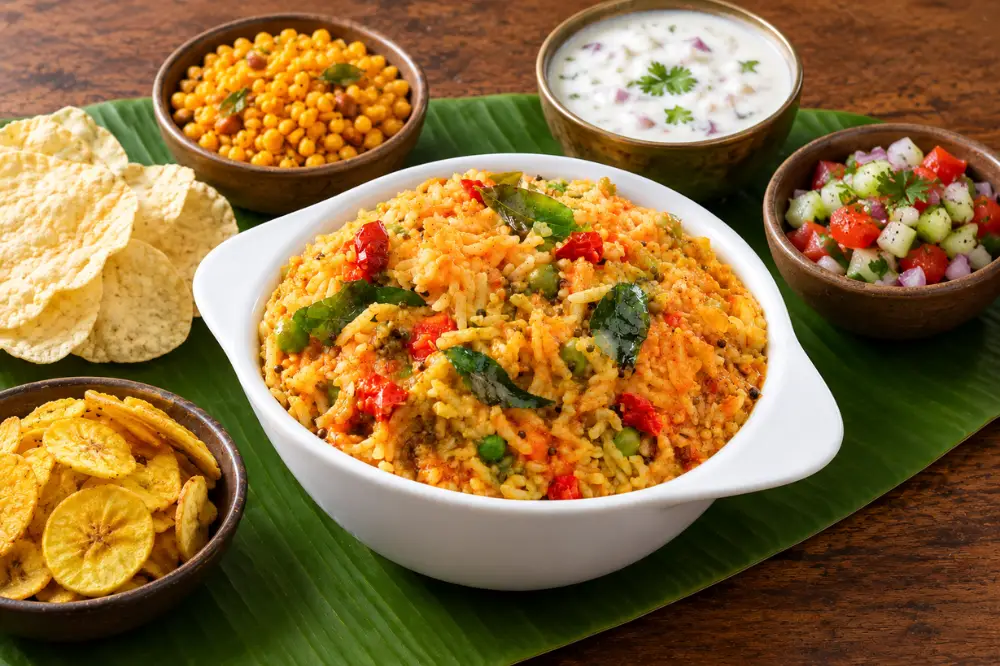
Bisi bele bhat must be served hot. That’s actually part of its name, and the dish thickens naturally as it cools.
It is usually served with:
What makes it particularly satisfying is the contrast between the soft rice-and-lentil mixture and a crisp accompaniment.
Such regional preparations also provide an opportunity to explore flavours other than the best-known dosa and idli combinations when people visit a South Indian restaurant.
The story of traditional bisi bele bhat is much more than just rice and lentils. From bisi bele bhat origin linked to Mysore Palace to its unique bisi bele bhat masala, it is all about making a dish that is deeply connected to Karnataka.
Even the calorie count of bisi bele bhat varies based on how it’s made, a reminder that each recipe is different. At Sagar Ratna, we celebrate such regional classics and invite you to experience the wider flavours of South Indian cuisine with us.
Bisi bele bhat has a spicy and tangy taste with a hint of sweetness from the jaggery. Tamarind lends a sourness; roasted spices add warmth and aroma. And its mild rice and lentil texture ties all these flavours together in every mouthful.
No, bisi bele bhat and khichdi are very different dishes, though both are lentils and rice. Khichdi is a mild, simple one-pot dish of rice, dal, and basic seasoning, whereas Bisi Bele Bhat has tamarind, jaggery, vegetables and a unique spice blend for a much deeper flavour. Bisi Bele Bhat is usually more aromatic, tangy, and a little sweet, whereas khichdi is generally softer in taste and more comforting than complex.
Yes, some older versions were prepared without vegetables and focused on rice, dal, tamarind, jaggery, spices and ghee. Mixed vegetables have become common in modern and restaurant-style preparations. Both approaches retain the spicy, tangy, and mildly sweet character of the dish.
Bisi Bele Bhat is usually paired with crisp accompaniments such as papad, boondi, potato chips or banana chips. Plain curd, raita, or a fresh salad is a cooling counterpoint to its warm spices. At Sagar Ratna, we think that thoughtful accompaniments can make the experience of exploring regional favourites at a South Indian restaurant even more enjoyable.
Its connection with the Mysore Palace and its later spread into everyday homes give the dish a distinctive cultural story. It also reflects Karnataka’s preference for balancing spicy, sour, sweet, and aromatic flavours within a single preparation. This journey from royal kitchens to everyday tables has made it an enduring regional classic.

 Instagram
  Facebook
  Twitter