 India
India
 Netherlands
 Singapore


Looking for a Navratri Thali? Try Sagar Ratna’s Special Festive Feast



In This Blog
Traditional filter coffee is more than just a beverage you will find in an authentic vegetarian restaurant. It symbolises a ceremony of warm Indian aromas and respect for traditions.
Affectionately known as filter kaapi, this traditional beverage truly belongs to South Indian cuisine. It is a significant component of Indian food culture which holds great cultural importance.
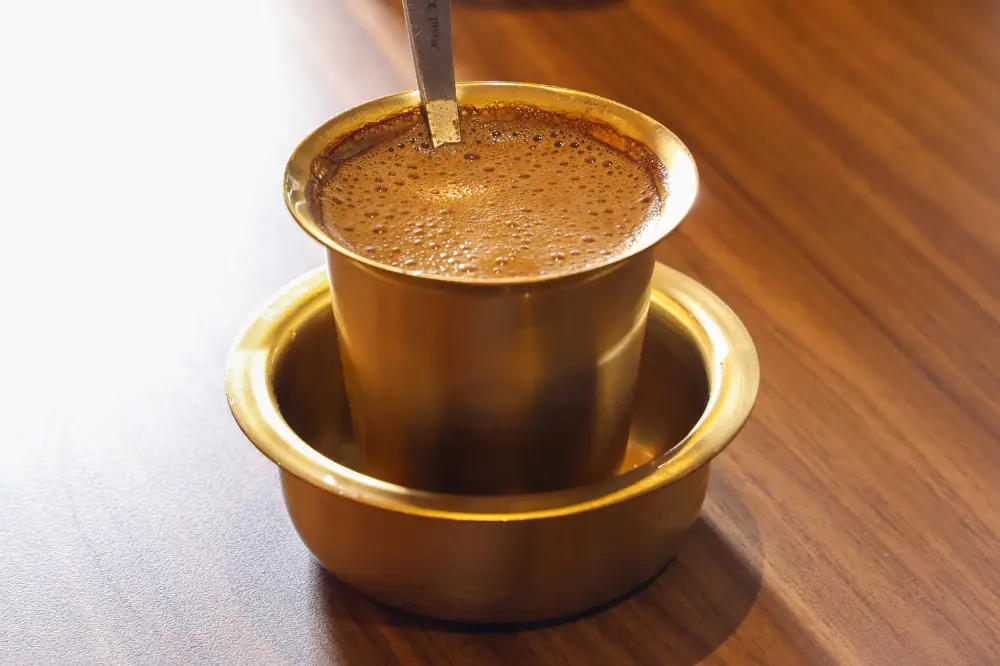
The traditional filter coffee of South India goes by the name ‘filter kaapi’. In easy English, ‘kaapi’ translates to coffee, while ‘filter’ stands for the metal filter that the coffee decoction is brewed in. The name of the beverage thus conveys not only the process but also the culture associated with it.
The traditional method of making filter coffee includes a technique called ‘slow drip’. This is done by putting the ground coffee beans in a metal filter where the hot water slowly passes through.
This creates a strong extract. It is then mixed with hot milk and sugar to create a smooth, rich cup.
Many South Indian blends also include chicory. Chicory adds a roasted depth and gives the drink its familiar, slightly strong taste.
A good cup of coffee usually depends on simple but careful details:
This process makes the coffee feel personal, warmer, and more delicious than instant coffee.
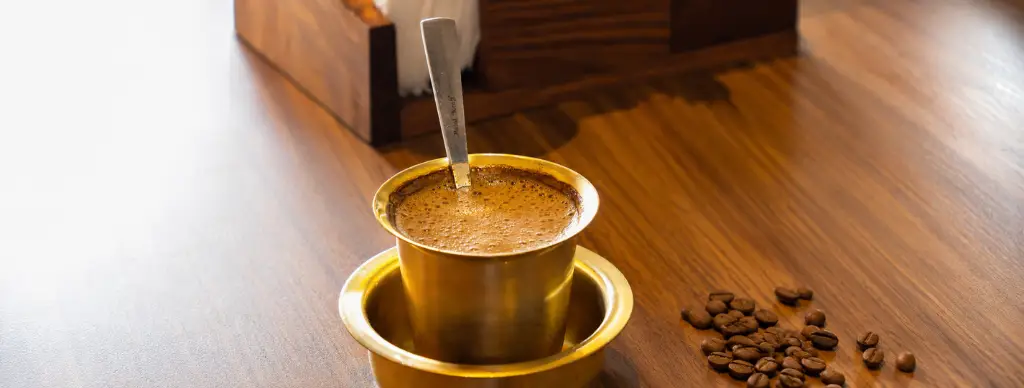
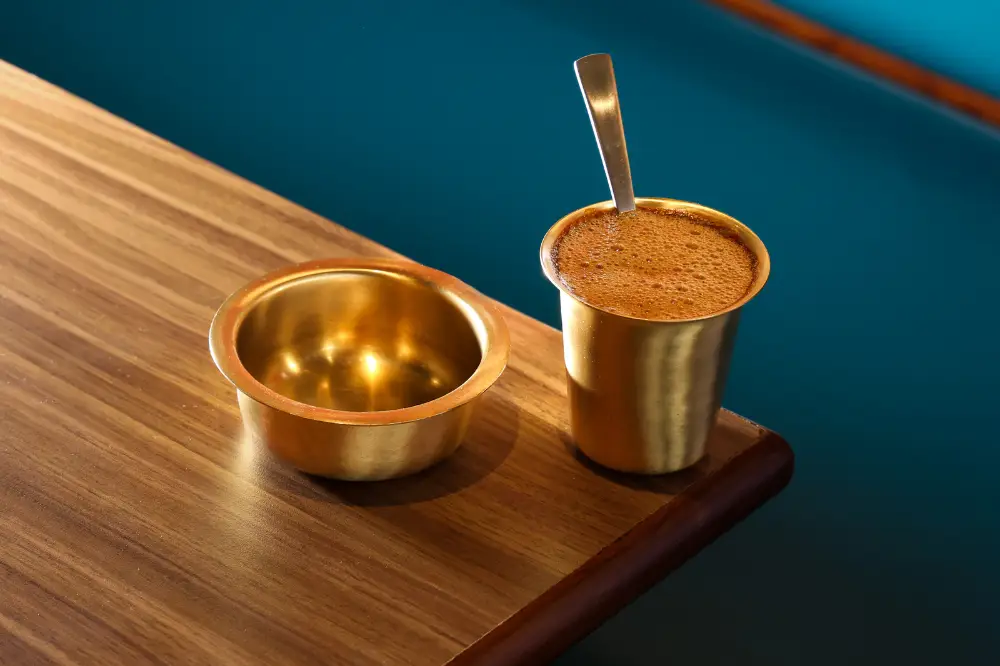
This classic serving style is one of the most traditional ways. Coffee is served in a steel tumbler placed inside a wide saucer called a dabarah.
This set is not only decorative. It also has a practical purpose.
The tumbler and dabarah help to:
In the South Indian kitchen, looks count as much as taste. The vessel, the temperature, the smell, the first sip- it all adds to the experience.
At Sagar Ratna, we carry on with this traditional manner of serving filter coffee, thereby retaining the coffee rooted in its original charm.

In most homes in South India, coffee is one of the first things that is served to the guest. This culture makes them feel relaxed and at home.
That is why filter kaapi is deeply linked with hospitality. It is not served only for taste. It is also served as a gesture of welcome.
In South Indian culture, coffee is often shared during:
In some families, serving coffee to elders also reflects respect. The act is simple, but the meaning is warm and personal.
In the kitchen, the smell of coffee before breakfast. That smell is the beginning of the day in many South Indian families.
The morning ritual usually includes:
This daily rhythm gives coffee its emotional value. People may move to new cities, but one familiar sip can bring back home, family, and slow mornings.
Sagar Ratna helps guests enjoy this comfort even outside a South Indian home.
The history of filter coffee in India is indeed a fascinating one, as it can be traced way back to the 17th century.
Today, classic filter coffee is known by many names, including:
But what makes it so unique is not just its history but how much it has integrated itself into the lives of South Indians.
It found its way into daily routine, whether in the morning or for special occasions like weddings or in family meetings and also when entertaining guests at home.
At Sagar Ratna, we have tremendous pride in this legacy, as filter coffee is not just a drink but an essential part of South Indian cuisine and hospitality.
A South Indian meal can have multiple courses. There can be idlis, dosas, sambar, rasam, chutney, rice, and other tasty accompaniments to it. After such a meal, filter coffee is an apt conclusion.
Filter coffee refreshes the palate and lifts one’s spirits. Some of the best accompaniments to filter coffee include:
A good vegetarian restaurant does more than serve food. It preserves familiar tastes, rituals, and memories. That’s what we aim for.
When guests order coffee, they are often looking for more than flavour. They want the comfort of a proper South Indian serving style.
For some guests, it brings nostalgia. For others, it becomes their first real introduction to a cultural tradition.
At Sagar Ratna restaurant, we keep the tradition alive for every generation by focusing on:
Traditional filter coffee carries more meaning than its size suggests. It speaks of homes, elders, guests, weddings, mornings, and family conversations.
The combination of the tumbler and dabarah helps in doing so. The act of pouring makes it unique. The foam makes it easily recognisable. At Sagar Ratna, we take great pride in carrying forward this traditional custom through taste, service, and tradition.
Every single cup served at our Sagar Ratna restaurant is filled with warmth and nostalgia that comes with a South Indian dining experience. We invite you to experience South Indian culture via coffee.
Filter coffee is different since it is made with a slow drip brewing method and a strong decoction of coffee. It is often mixed with hot milk and has chicory in it frequently for a deeper flavour. It is a unique part of South Indian cuisine, with its traditional serving style, frothy top and tumbler-dabarah ritual.
Chicory is a roasted root often blended with coffee powder in South Indian filter coffee. It adds a slightly woody, deep, and mildly bitter flavour to the drink. Many people associate this taste with the classic flavour of filter coffee.
Filter coffee is served in a tumbler and a dabarah because it is through this process that coffee can be cooled and frothed. The coffee is alternatively poured into the two receptacles before consumption. Through this process, the milk, sugar, and essence of coffee are perfectly mixed, making the coffee smoother and more enjoyable.
Filter coffee pairs well with classic South Indian dishes like idli, dosa, medu vada, upma, and uttapam. Many people also enjoy it after a full South Indian meal. Its strong and smooth taste makes it a perfect ending to a comforting vegetarian dining experience.
The filter coffee at Sagar Ratna has a special feel to it as it comes with the same cultural feel associated with South Indian homes. It is a blend of strong coffee, hot milk, a smooth taste and a sense of comfort that is familiar. It is often served to guests after a full vegetarian meal, dosa, idli or vada.

 Instagram
  Facebook
  Twitter