 India
India
 Netherlands
 Singapore


Benne Dosa and Filter Coffee: A Classic South Indian Combination



In This Blog
Idli may be one of South India’s most familiar breakfast dishes, but it is far from the same everywhere. Travel from Karnataka to Tamil Nadu or Kerala, and you will see changes in its shape, texture, ingredients and even the way it is steamed. Some are broad and soft, some are flavoured, and some carry the smell of leaves used in the preparation of food.
Learn about different types of idli in this blog that tells an interesting story of how one simple dish got so many regional identities.
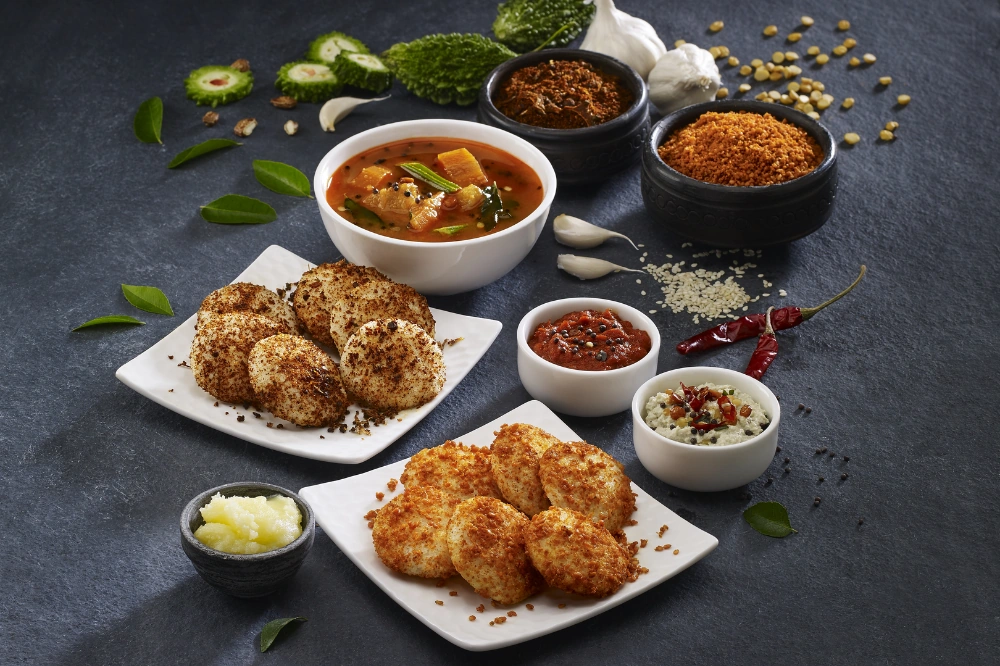
Traditional idli usually begins with rice and urad dal. The ingredients are soaked, ground, fermented and steamed. Across South India, cooks adapted this method by changing the grain, seasoning, mould or steaming material.
That is why different types of idli plates vary in size, aroma, flavour and texture. The accompaniments vary too. The different types of chutney for idli may include coconut, tomato, peanut, coriander or mint.
The clearest way to understand this variety is to look at the regions where individual styles became popular.
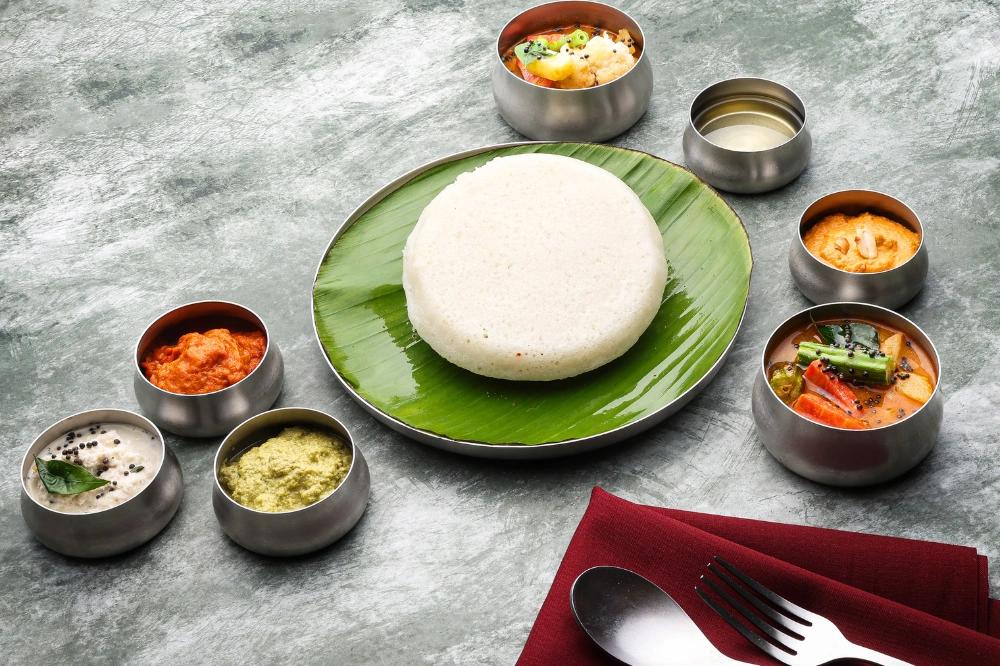
Thatte Idli is closely associated with Bidadi and the Bengaluru-Mysuru belt. “Thatte” means plate in Kannada, referring to the broad mould in which it is steamed. Among other types of idli, this one is easy to recognise because of its size and pillowy texture.
The fermented batter is poured into a larger plate-like mould, producing a wide, thick and soft idli.
Rava Idli is strongly associated with Bengaluru. Instead of a fermented rice base, it uses semolina with curd and a savoury tempering.
Its texture is soft but slightly grainy, while the seasoning gives it more flavour than plain idli. Today, it is common at a South Indian restaurant and can be chosen as a healthy South Indian breakfast when someone wants an alternative to a rice-based idli.
Mallige Idli is associated with Mysuru and southern Karnataka. “Mallige” means jasmine, a reference to its white colour and delicate appearance.
Rice, urad dal and, in some recipes, beaten rice help create its notably fluffy texture. Its mild taste works well with several different types of chutney for idli.
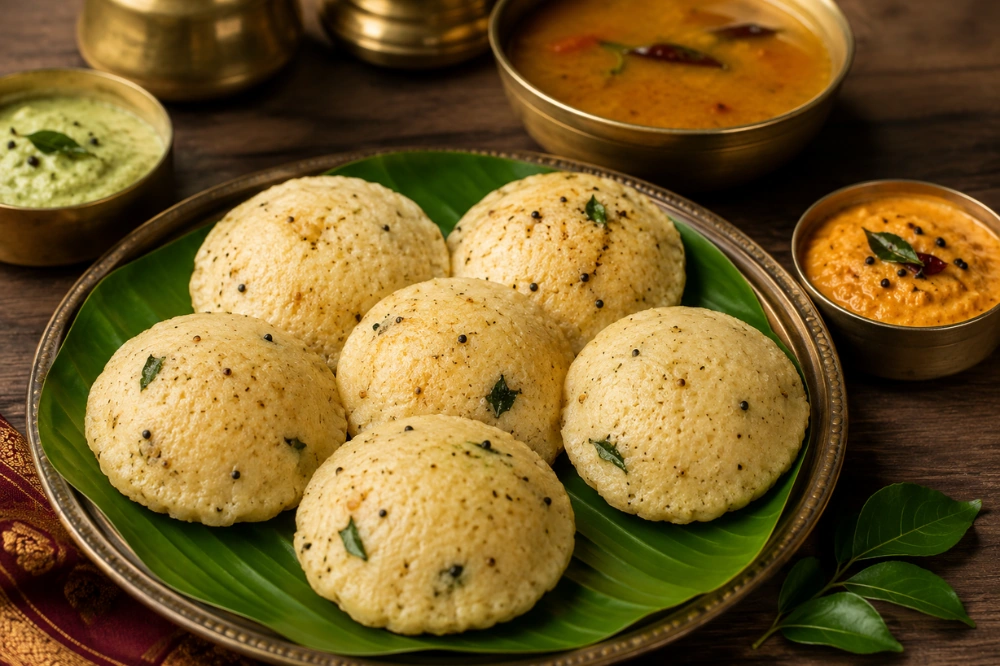
Kanchipuram Idli comes from the temple town of Kanchipuram. Its batter is seasoned with ingredients such as black pepper, cumin and ginger, making it more aromatic than plain idli.
Traditional versions may be steamed in larger cylindrical forms, sometimes using leaves. The result is soft, savoury and fragrant. It shows how seasoning can change the character of an otherwise familiar dish.
A mild coconut chutney balances its peppery flavour well. This also shows why the different types of chutney for idli should complement the idli rather than overpower it.
Ramassery Idli comes from Ramassery near Palakkad. It is traditionally steamed using cloth and earthen vessels, giving it a thin, flat form.
It may resemble a small, soft dosa, but its texture remains tender and steamed. Its unusual shape adds variety to different types of idli plates and shows how cooking technique contributes to South Indian cuisine.
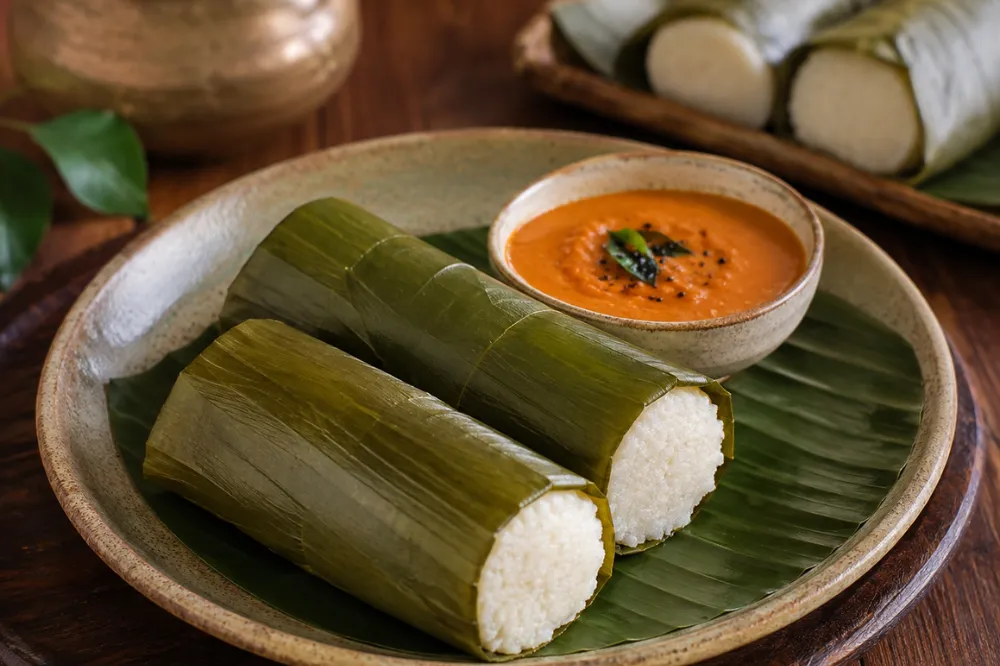
Moode Idli is popular around Udupi and Mangaluru. Its batter is steamed inside cylindrical moulds made from screw-pine leaves.
The leaves give the idli a mild aroma and a tall cylindrical shape, while the centre remains soft and moist. Among the different types of idli, Moode Idli is a clear example of how the steaming vessel can influence both presentation and flavour.
Sambar may be the familiar companion, but chutney changes the balance of the plate.
Coconut chutney is mild and creamy, so it works well with a strongly seasoned Kanchipuram Idli. Tomato chutney brings tang to softer varieties. Peanut chutney adds richness, while coriander or mint chutney gives freshness.
Trying different types of chutney for idli also makes different types of idli plates more interesting when several styles are served together. At a South Indian restaurant, such combinations help diners compare regional flavours rather than treating every idli as the same dish.
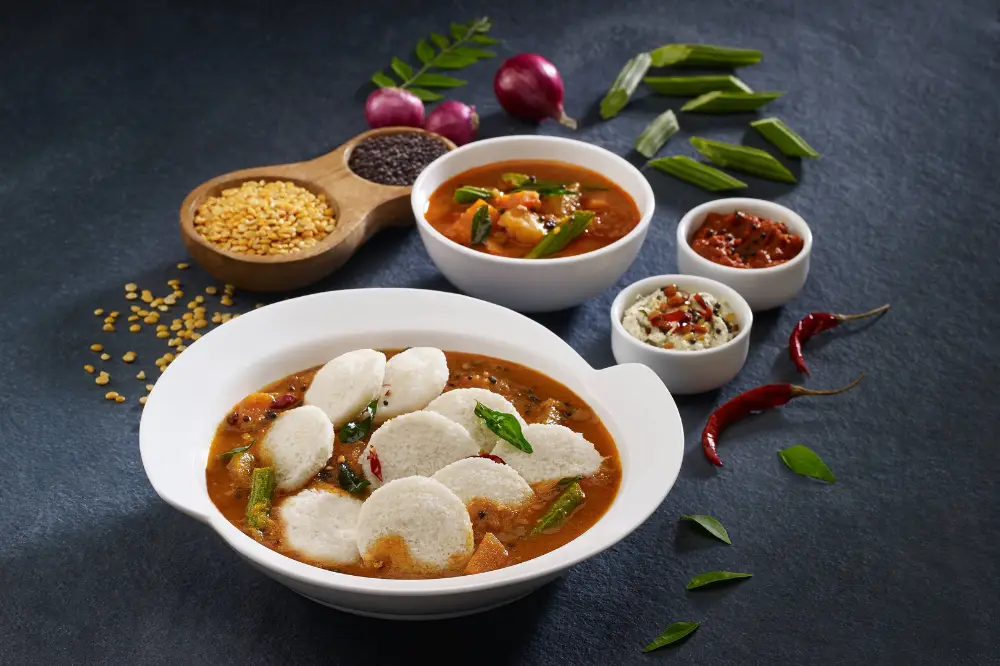
You can enjoy a healthy South Indian breakfast with a steamed serving along with sambar that doesn’t feel too heavy. Regional idlis are also good later in the day.
Families can enjoy idli with dosa, vada and uttapam and other dishes for a family dinner out. That means you get to taste several parts of South Indian cuisine in one meal.
For Delhi diners, variety is sometimes as important as familiarity when selecting a restaurant in Civil Lines. Sagar Ratna is one of the options for the recognised south Indian favourites in the area.
What makes the different types of idli interesting is how small changes create distinct results. A broad mould shapes Thatte Idli. Semolina defines Rava Idli. Spices give Kanchipuram Idli its character. Earthen steaming distinguishes Ramassery Idli, while screw-pine leaves give Moode Idli its aroma.
Both these traditions are indicative of the depth of South Indian food. They also provide more options for people who want a healthy South Indian breakfast, whether ordering at a South Indian restaurant or exploring regional food at a restaurant. If you’re sharing a South Indian meal with your family at a restaurant, variety can make it more enjoyable.
Good starters are Thatte Idli, Rava Idli, Mallige Idli, Kanchipuram Idli, Ramassery Idli and Moode Idli. They are obviously different in shape, ingredients, seasoning and steaming method.
There isn’t one best choice. The varieties of chutneys for idli are coconut, tomato, peanut, coriander and mint chutney. Very spicy idlis usually pair well with mild chutneys, and plain idlis go well with tangier chutneys.
Yes. Steamed idli can be part of a healthy South Indian breakfast, especially when served with sambar and sensible portions of chutney. Its overall nutritional value still depends on ingredients and portion size.
Yes. Idli is also commonly served alongside dosa, vada, uttapam, sambar and chutneys, making it suitable for a light evening meal too. At a South Indian restaurant, diners can often try idli with several regional accompaniments on the same table.
When comparing local restaurants, look for freshness, regional variety and good accompaniments. Different types of idli plates can help diners explore more than the usual idli-dosa combination.

 Instagram
  Facebook
  Twitter