 India
India
 Netherlands
 Singapore



Kokum Drink: A Refreshing Coastal Beverage with Many Benefits



In This Blog
Some foods rely heavily on strong spices. But some know how to use just the right amount of subtlety. One such food is Appam. The mild taste of appam, with its soft inside and crispy outside, goes well with creamy stews, spicy chutneys, and more sweetened accompaniments.
Such versatility is a testimony to South Indian cuisine. At an authentic South Indian restaurant such as Sagar Ratna, you can have completely different dining experiences.
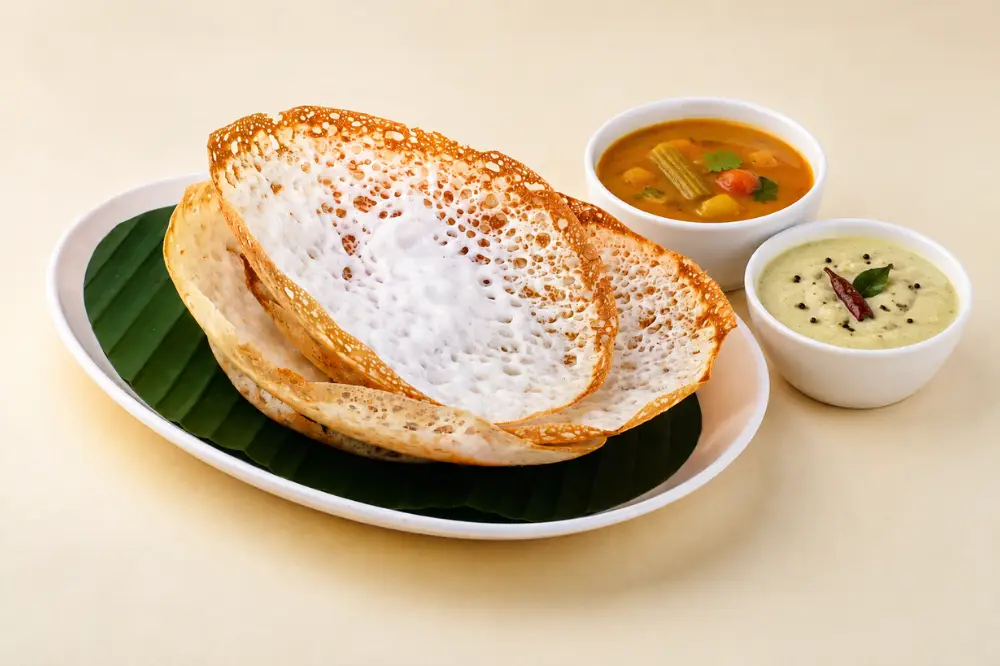
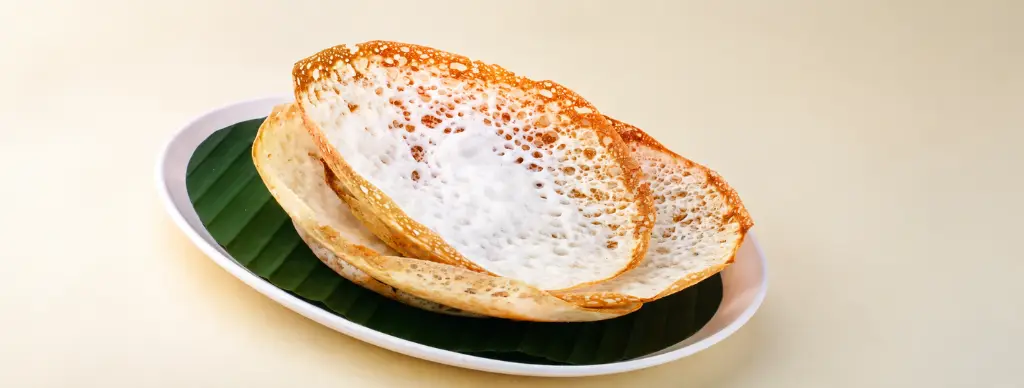
Appam is a bowl-shaped pancake made from a fermented batter of soaked raw rice and grated coconut or coconut milk. It is distinguished by having a soft, spongy centre and lacy edges.
Kerala Tourism describes it as an all-time favourite breakfast preparation made from fermented rice and coconut batter. It is typically cooked in a curved pan, which helps to achieve the contrast between the thin outer edge and thicker centre.
This batter is swirled around the pan, unlike a dosa, which is spread on a flat tawa. There’s the crispness and the softness in one bite. It’s the variety of textures that you get in South Indian cuisine.”
The basic preparation commonly includes:
There are several variations with cooked rice or a cooked rice-flour mixture called kappi. Household and regional methods can therefore differ.
A good South Indian restaurant therefore depends on more than the ingredient list. Batter consistency, fermentation and pan control all influence the final result.
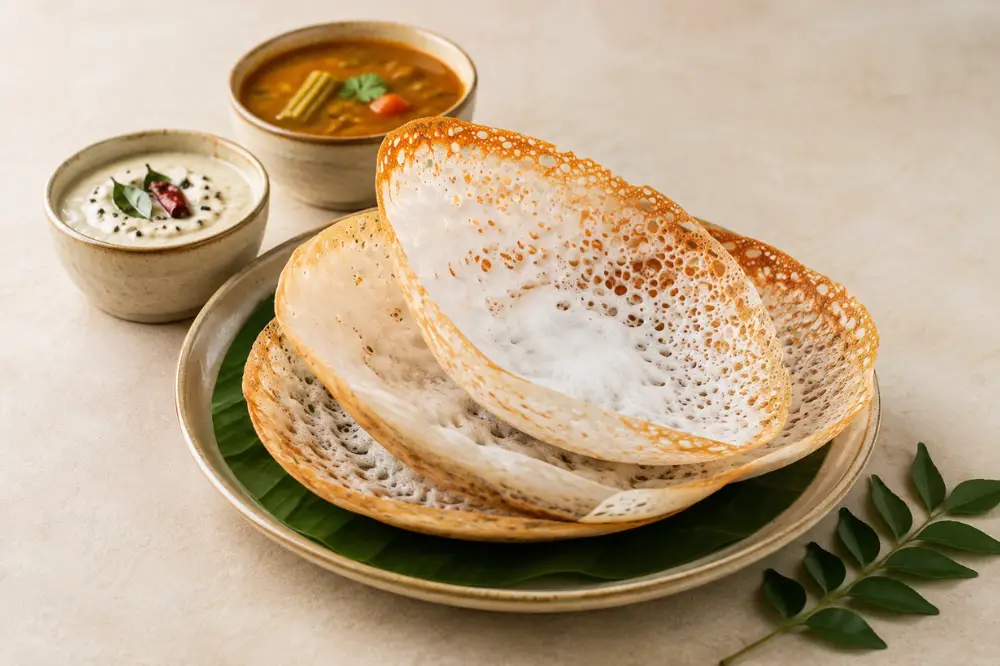
Fermentation does a lot of the silent work. This helps to give the dish its airy centre and gentle tang.
The original appam recipe calls for letting the batter rest for several hours; some recipes even call for overnight. Timing is different, so the batter itself is more important than just following the clock.
A good Appam recipe should get you:
That balance is part of why it fits so naturally into South Indian cooking.
Its mild flavour is a plus. It can stand up to sauces and gravies without falling apart.
Appam with ishtu is a famous breakfast. It is a mild stew of Kerala style. The vegetable version is milder with coconut milk and gentle spice, which is particularly good with the soft centre.
So a South Indian restaurant can take the meal in a lot of directions.
| Pairing | What it brings | Why it works |
| Vegetable Stew | Light spices, vegetables, creamy notes. | The soft centre takes the stew; the edges stay textured. |
| Coconut Chutney | Fresh coconut, chilli and tempering. | It gives an edge without adding weight to the meal. |
| Vegetable Kurma | A more fragrant, richer gravy. | The base is mild to balance the stronger masala. |
| Sambar | Lentils, tang and warm spices. | It makes the plate feel hearty and familiar. |
| Sweetened coconut milk | Gentle sweetness. | Rice and coconut also sit comfortably with sweeter flavours. |
This range lets the dish move beyond one fixed breakfast combination.
Many people are looking for how to make appam as the ingredients look easy. They are, but the technique requires attention.
We have to do this simply as:
If the batter is too thick, it may not spread neatly. If it is too thin, the centre can lose its soft body.
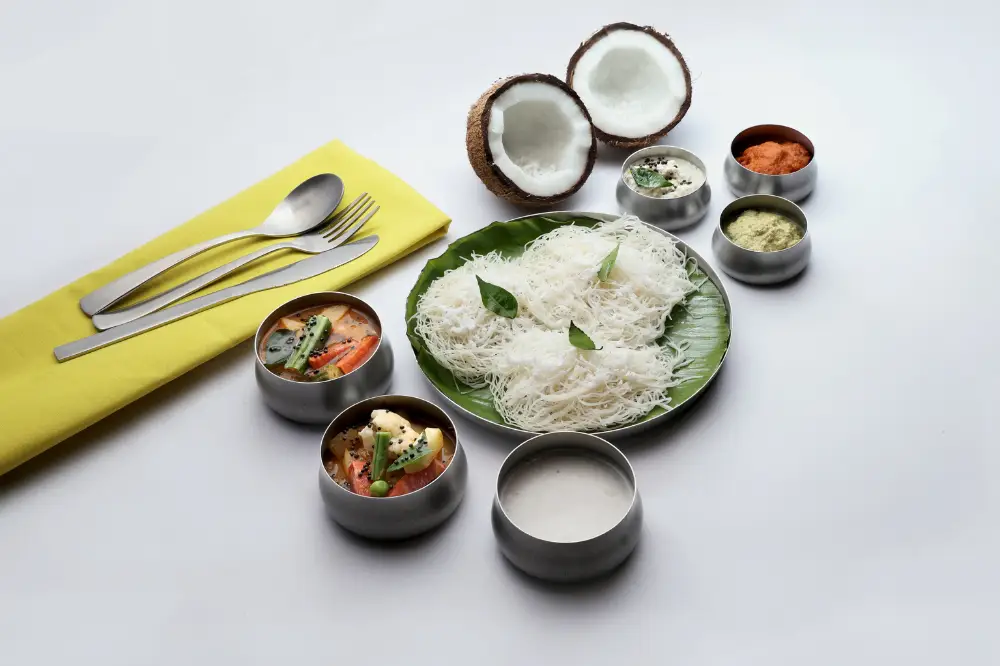
The question about appam being a healthy breakfast choice needs a quick yes or no. What matters is the entire plate.
The basic version is largely rice-based, and coconut adds flavour and fat. “Portion size and sides can make a big difference to the meal.
For a more balanced plate, consider:
Instead of labelling one food as automatically healthy, look at the meal as a whole. That is equally useful when ordering at a South Indian restaurant.
A fresh coconut chutney is one of the simplest options.
Blend grated coconut with roasted chana dal, green chilli, ginger and salt with enough water for the desired consistency. Tempering with mustard seeds and curry leaves adds more aroma.
You can also adjust the flavour easily:
Small changes in the side can make the meal feel different.
Yes, but it helps to break up related dishes.
People ask me how to make sweet appam. But Kerala has many sweets and snacks which are similar in name. Unniyappam is another preparation made out of ingredients like rice, jaggery, banana and coconut.
The regular fermented version can also be sweeter when served with lightly sweetened coconut milk. This is yet another example of the versatility of South Indian cuisine.
To call it just a breakfast food doesn’t do justice to its range.
This South Indian dish can sit alongside a gentle vegetable stew in the morning, a richer kurma later in the day or a simple chutney when you want something lighter.
That’s because the base is mild. The accompaniment may alter the entire character of the plate.
Making Appam at home is satisfying, but getting the right texture requires practice. The batter needs good fermentation, and the pan technique makes a huge difference to the final result.
Hence, many diners prefer to sample local specialities at a reliable South Indian restaurant, where they can be enjoyed with the right accompaniments.
It’s not just the usual favourites of dosa and idli at Sagar Ratna. Guests can try different flavours of South Indian cuisine but still eat dishes that are familiar and comforting.”
If you are looking for a restaurant in Civil Lines for a family meal, a casual lunch or a relaxed dinner, Sagar Ratna brings a wide vegetarian menu together in one place. It is a convenient way to discover more regional flavours without moving too far away from the classics you already enjoy.
Appam is proof that such a simple dish can be so versatile. It has a soft centre and mild flavour, with delicate edges, making it as good with a comforting vegetable stew as with chutney or a richer curry.
If you are looking for a restaurant in Civil Lines that serves the familiar favourites along with the wider flavours of South India, try Sagar Ratna. Come for the old, stay for the new.
This South Indian dish is light in the centre and slightly airy due to the fermentation process. It also adds a bit of tang that goes well with savoury sides. Proper fermentation is one of the key steps for a good Appam.
Yes, you can prepare the batter in advance and let it ferment overnight. This allows the batter to develop the right texture and flavour. The duration for fermentation will depend on room temperature.
Vegetable stew is one of the most popular pairings because its mild coconut-based gravy complements the soft texture well. Coconut chutney, sambar and vegetable kurma also work well. The choice depends on whether you prefer a lighter or more flavourful meal.
Appam is cooked in a curved pan that spreads a thin layer of batter around the sides while more batter remains in the middle. The edges cook faster and turn delicate and crisp. The thicker centre stays soft, fluffy and slightly spongy.
Yes, it can be enjoyed at different times of the day and is not limited to breakfast. Pair it with vegetable stew, kurma or another curry for a more filling dinner. Its mild flavour makes it easy to match with several vegetarian accompaniments.

 Instagram
  Facebook
  Twitter