 India
India
 Netherlands
 Singapore


What Is Paniyaram? Ingredients, Types, and South Indian Origins



South India doesn’t tell one single food story, and that’s exactly what makes it so exciting. South India comprises five states, including Tamil Nadu, Kerala, Karnataka, Andhra Pradesh, and Telangana. Every state brings its own ingredients, flavours, and cooking styles.
At Sagar Ratna, we think of traditional South Indian dishes as a journey through five very different culinary worlds.
This blog will walk you through what makes South Indian cuisine so distinctive and help you decide which dishes deserve a first place in your heart.
Authentic South Indian food has worked for years due to the use of strong flavours that go well on the same plate without any one of them taking over. The result is a cuisine that is spicy, tangy, creamy, earthy, and aromatic, all at once.
This is how the balance is achieved:
Together, these elements are what make South Indian cuisine so satisfying. Nothing feels out of place, and every bite leads naturally to the next.
Tamil Nadu cuisine focuses on rice, lentils, tamarind, and appropriate seasoning. These vegetarian South Indian dishes balance well in terms of being crispy, tangy, warm, and cooling in a single meal.
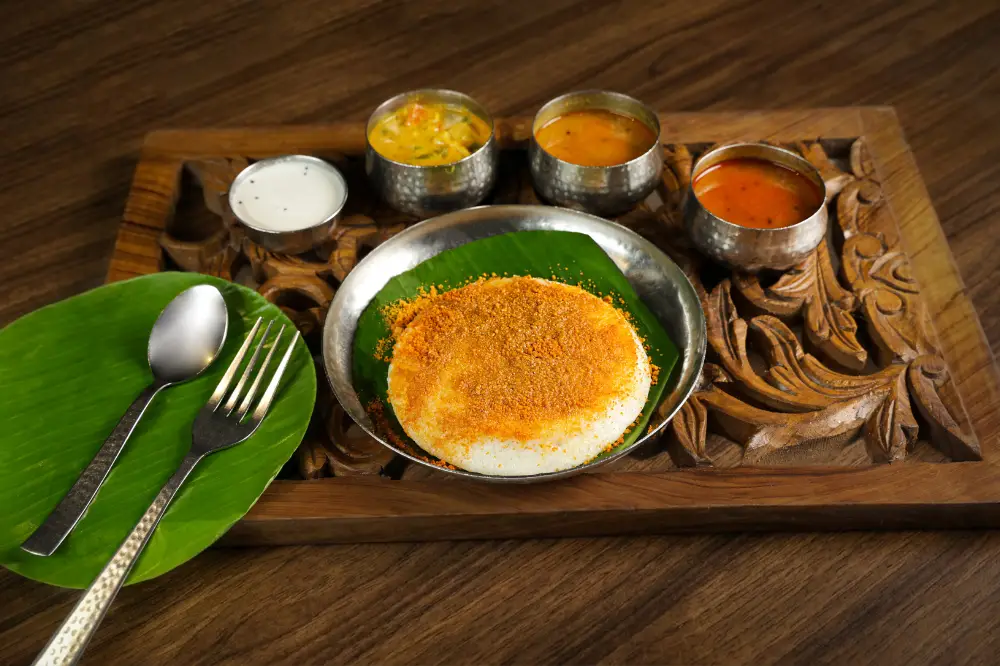
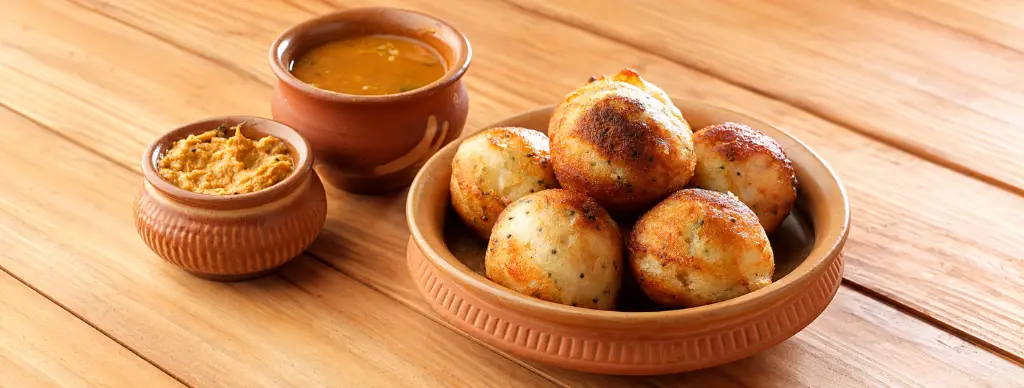
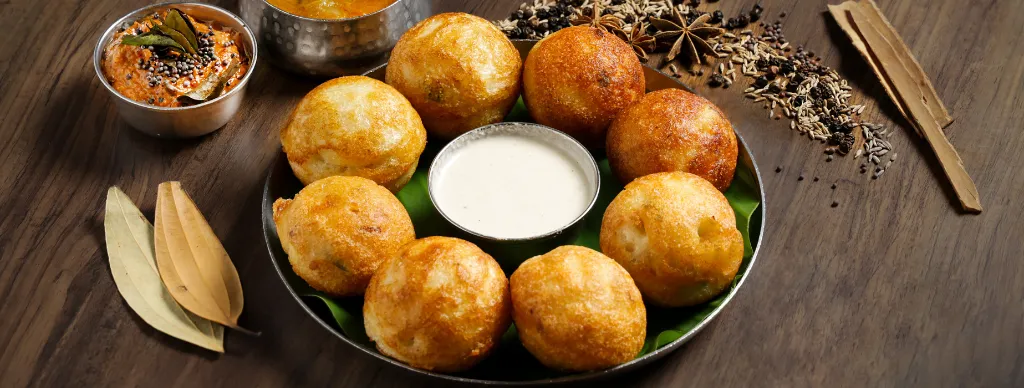
These soft, fermented rice and lentil cakes are steamed and served with sambar and chutney. These are soft, light, and comforting foods.
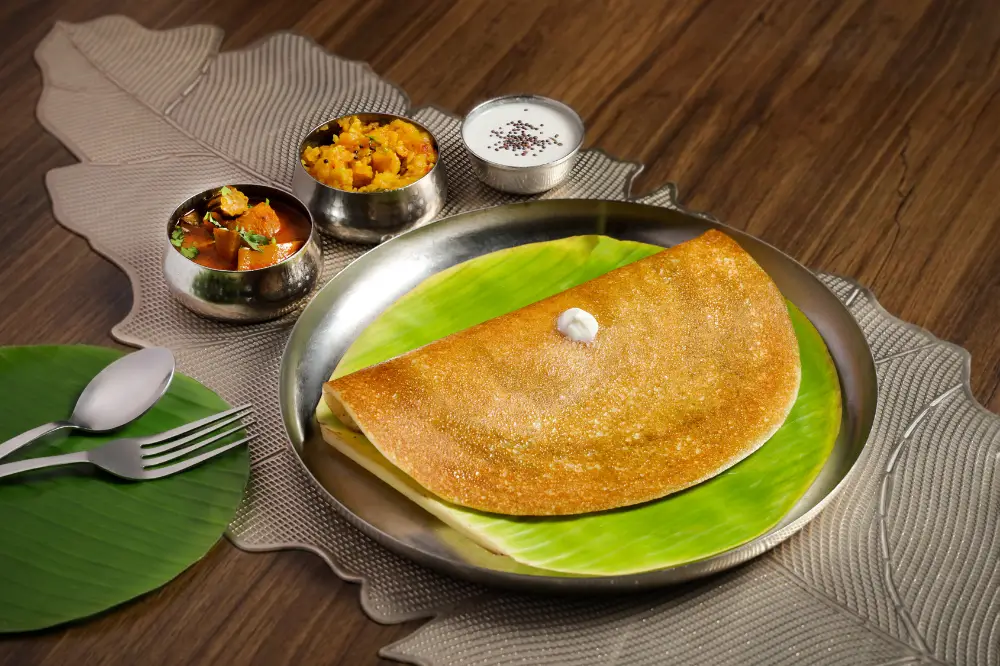
This is a thin, golden dosa that has warm potato stuffing in it and is served with sambar and coconut chutney. It is one of the most iconic traditional South Indian dishes for a good reason.
This is sour tamarind rice with spices, curry leaves, and peanuts. It is a very interesting way in Tamil cuisine to create something tasty out of some simple items.
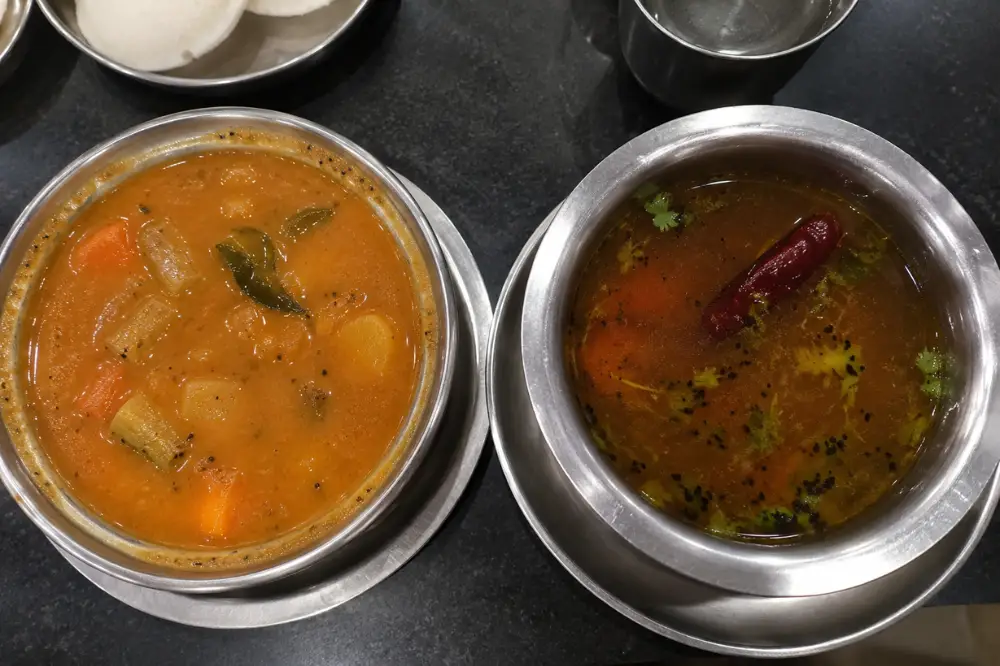
This light, peppery preparation uses tamarind or tomato to create a sharp, aromatic course. Many people enjoy it as a digestive towards the end of a meal.
Rice and yoghurt provide a cooling finish, lifted simply with mustard seeds, curry leaves, and green chillies. It’s the dish Tamil Nadu turns to when the meal needs a calm, gentle close.
The tropical climate of Kerala plays a big role in its food through coconut, rice, banana, and fresh seasonal vegetables. The cooking here tends to be gentler in spice but incredibly rich in texture and depth.
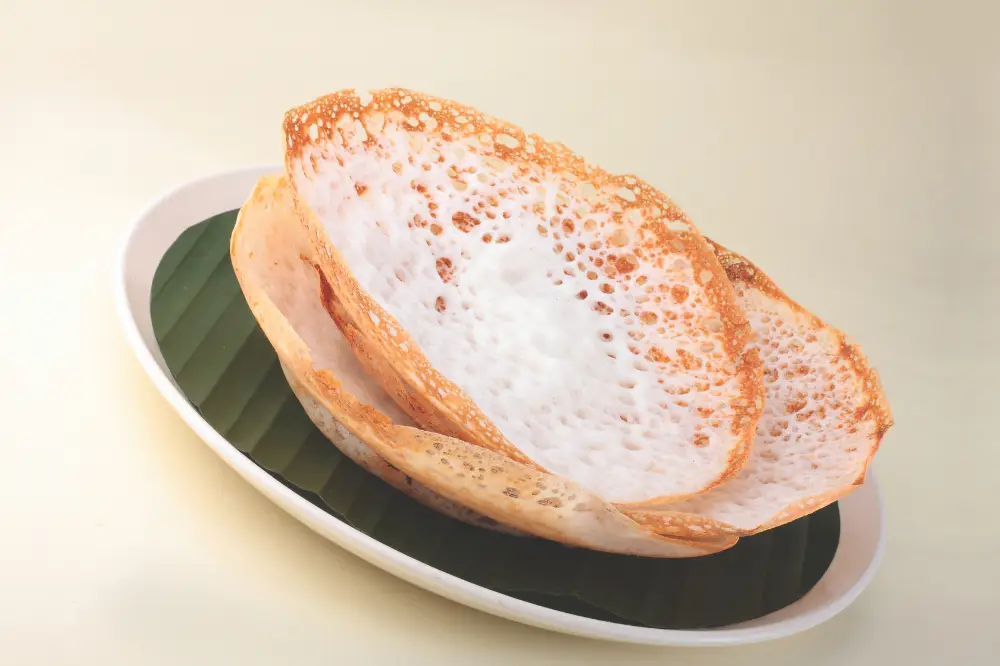
It is a perfect match of soft and delicate appam with vegetable stew made of coconut milk, potatoes, carrots, beans, and some spices. This is a truly simple and elegant meal.
Puttu consists of steamed rice flour and coconut that are served alongside kadala curry, which is a thick stew made of black chickpeas. A filling, satisfying breakfast choice for many locals.
Mixed vegetables are cooked with coconut, cumin, and yoghurt to make a smooth and slightly tangy curried dish. It is a common dish served in the traditional Sadya (banana leaf) feast.
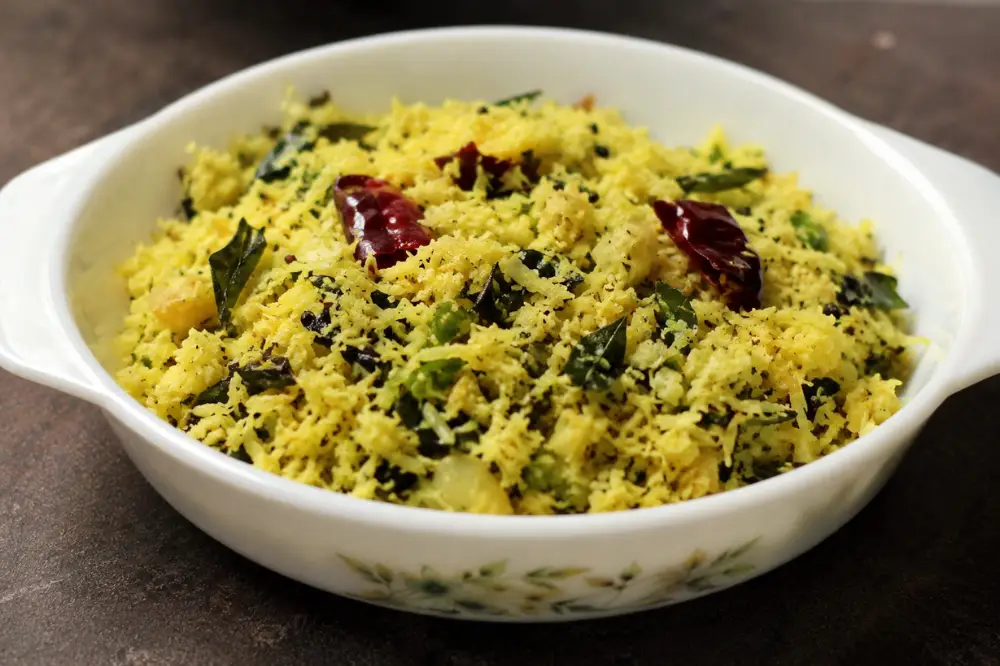
Finely cut vegetables are stir-fried with grated coconut, mustard seeds, and curry leaves to make a dish that is both simple and deeply flavourful.
This is one of the most cherished dishes from Kerala. Rice flakes (ada), jaggery, coconut milk, and cardamom are all slow-cooked together to form this favourite festival dessert.
Karnataka’s food stretches from its coastal region to millet-based inland cooking, and the variety shows. Some of India’s most beloved dosa styles were born here.
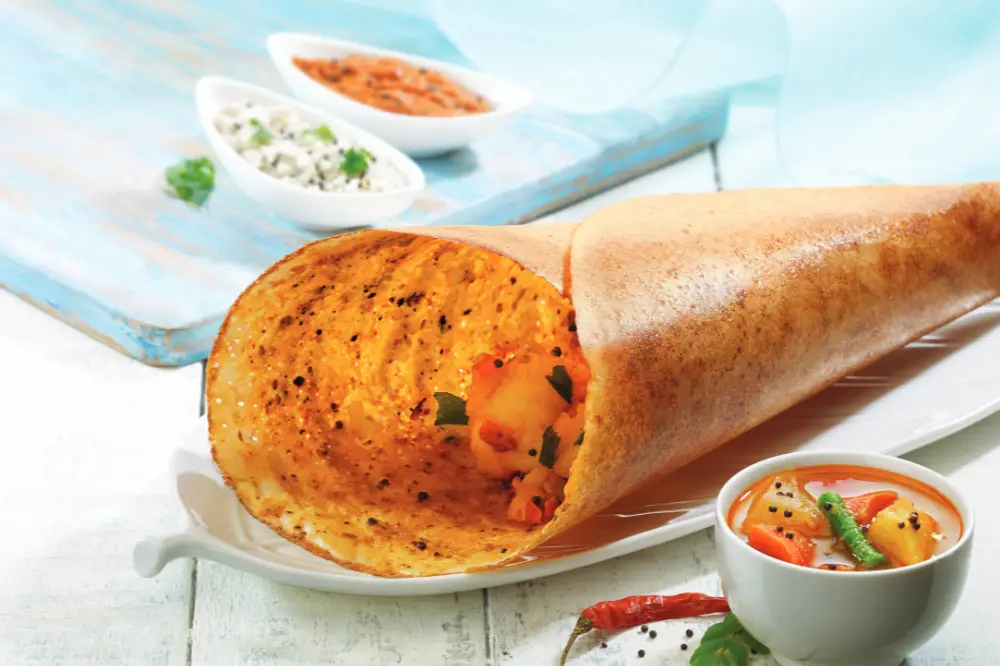
A crisp dosa is spread with spicy red chutney before being filled with seasoned potatoes. It is a bolder, more intense version of the classic. The red chutney is what sets it apart immediately.
Known for its buttery surface and distinctive crispness, this dosa is a Karnataka original that butter lovers will appreciate immediately. Simple accompaniments let the dosa itself take centre stage.
Rice, lentils, vegetables, tamarind, and a special spice blend create a hearty, comforting one-pot meal. It’s warming, deeply savoury, and exactly what authentic South Indian food feels like on a cold evening.
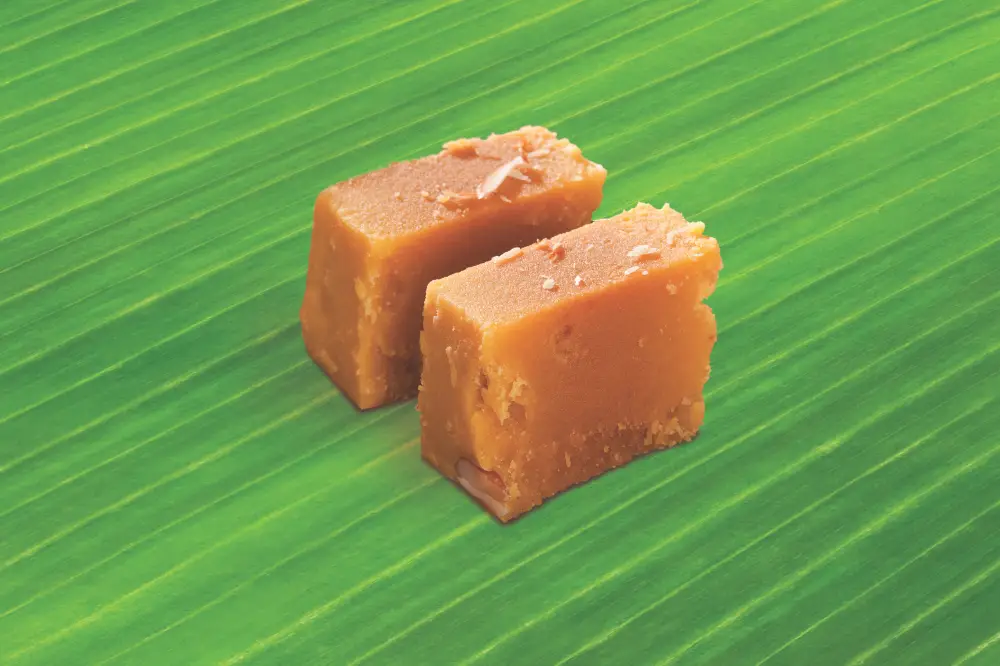
Gram flour, ghee, and sugar are cooked slowly into one of Karnataka’s most recognisable sweets. One bite and you’ll understand why it has stood the test of time.
Andhra Pradesh is known for bold seasoning, though there is far more depth here than chilli heat alone. Telangana, its neighbouring state, adds millets, sesame, peanuts, and tamarind to the mix and creates another rich layer of South Indian cuisine that not enough people get to explore.
A green gram crepe served with ginger chutney makes for a crisp, savoury, and satisfying breakfast. It’s one of the most distinctive vegetarian South Indian dishes from this part of the country.
Sorrel leaves bring a sharp, sour flavour that is deepened with chillies and tempering. It’s an acquired taste that has quickly become a regional favourite.
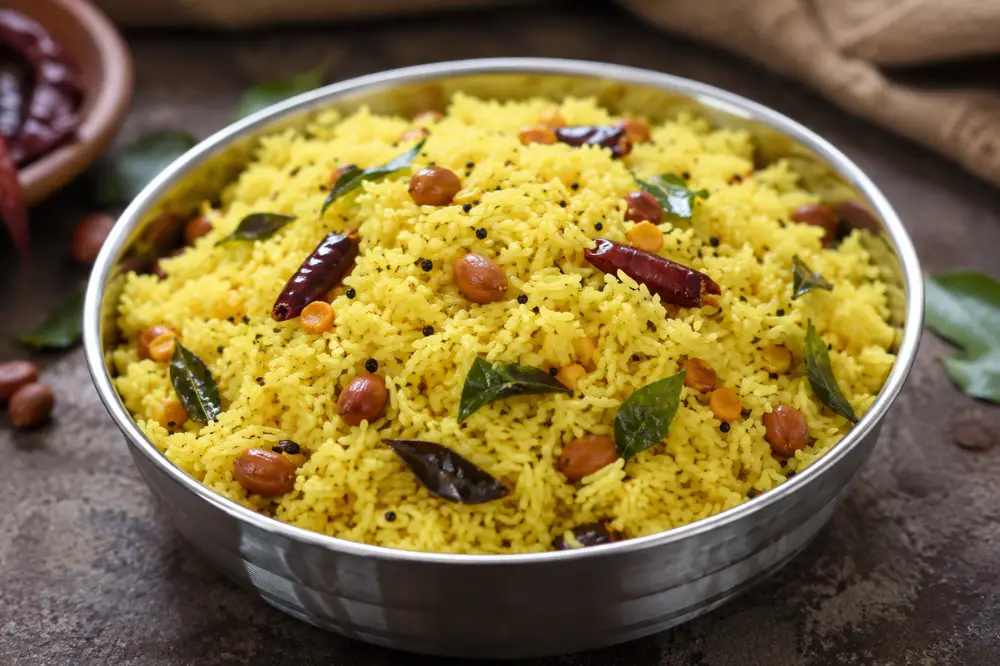
Tamarind, turmeric, curry leaves, and spices turn plain rice into a bright, tangy meal that is commonly prepared for festivals and temple offerings. Both Andhra Pradesh and Telangana claim it proudly.
Bitter gourd is simmered in tangy gravy that balances bitterness beautifully against tamarind and spice. It’s a dish that rewards a little patience and an open mind.
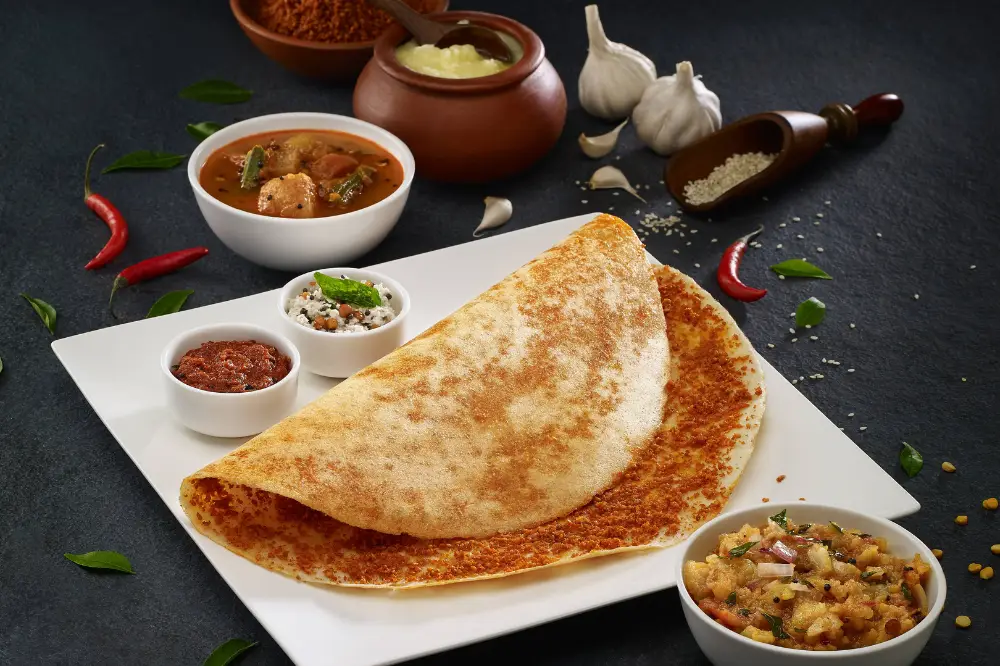
We bring these regional classics and signature favourites together in one approachable, welcoming menu. As a dedicated pure vegetarian restaurant, our goal is to let you experience how every element on the plate supports the next dish.
Here’s what you’ll find at the heart of our menu:
We prepare our chutneys and sambars fresh multiple times each day to provide fresh accompaniment to your dishes. Because only such an approach ensures that authentic South Indian food will be genuinely satisfying rather than simply filling.
Traditional South Indian dishes are not one fixed recipe collection but rather a dynamic array of flavours that have been created through five different states over centuries of cooking history. At Sagar Ratna, we bring that variety together, all made with fresh, preservative-free ingredients and time-honoured methods. Preserving tradition is all about how we’ve maintained our reputation as North India’s best South Indian pure vegetarian restaurant.
Visit your nearest Sagar Ratna restaurant when you’re ready to explore vegetarian South Indian dishes in a familiar, welcoming setting.
South Indian cuisine relies heavily on rice, lentils, tamarind, coconut, and fermented batters, which gives it a distinctly tangy, light, and aromatic character. North Indian food, by contrast, tends to lean on wheat, dairy, and richer spice blends for its flavour base. The tempering technique involves mustard seeds, curry leaves, and asafoetida sizzled in oil and is also a defining feature you’ll encounter across almost every traditional South Indian dish. The result is a cuisine that feels both bold and refreshing at the same time.
The spice levels vary quite significantly across the five South Indian states and across individual dishes. Kerala cooking, for instance, is known for gentle, coconut-forward flavours, while Andhra Pradesh leans towards bolder, fiercer seasoning. Many vegetarian South Indian dishes like curd rice, aviyal, and appam with stew are mild and cooling by nature. At Sagar Ratna, there is always something on the menu to suit every spice preference.
Masala Dosa is almost always the perfect starting point for anyone exploring authentic South Indian food for the first time. It combines a crisp, golden dosa with a warm spiced potato filling, sambar, and fresh coconut chutney, giving you a clear sense of the tangy, savoury, and aromatic notes that define the cuisine. Idli Sambar is another brilliant introduction, especially if you prefer something lighter and softer. Both dishes are available at every Sagar Ratna restaurant outlet and remain firm favourites with diners of all ages.
A Sadya is a traditional South Indian feast served on a banana leaf, most commonly in Kerala during festivals like Onam and Vishu. It brings together a wide spread of vegetarian South Indian dishes, including aviyal, thoran, rasam, sambar, rice, payasam, and pickles, all arranged in a specific order on the leaf. Each dish serves a purpose, from stimulating appetite to aiding digestion to providing a sweet finish. It is one of the finest examples of how thoughtfully balanced authentic South Indian food can be when served as a complete meal.
South Indian filter coffee is brewed using a traditional metal filter that slowly drips a strong decoction through finely ground coffee, often blended with chicory. The decoction is then mixed with hot, frothy milk to create a cup that is rich, smooth, and aromatic in a way that instant coffee simply cannot replicate. It is traditionally served in a steel tumbler and dabara, which is a small bowl used to cool and aerate the coffee by pouring it back and forth. At Sagar Ratna restaurant, filter coffee is the classic way to end a South Indian meal, and once you’ve tried it, it’s very hard to go back.

 Instagram
  Facebook
  Twitter