 India
 Netherlands
 Singapore


Traditional Bisi Bele Bhat: History, Ingredients, and How It’s Made


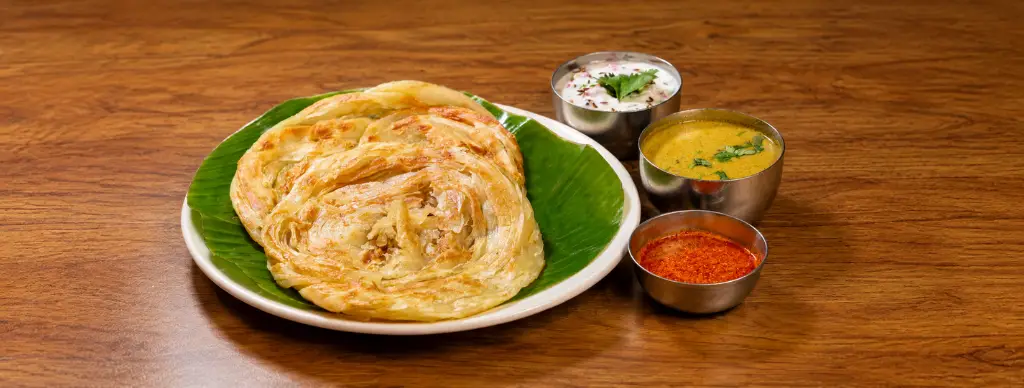
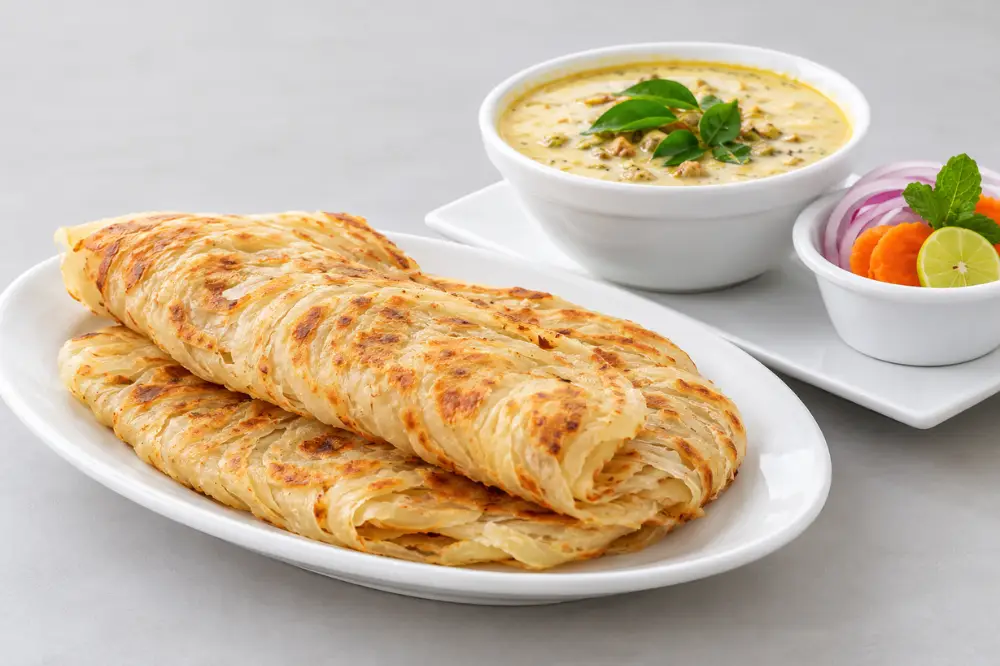
The regular paratha and the Malabar parotta look similar till you tear through them. A typical paratha is usually more compact in texture, but this Kerala speciality breaks into thin, soft layers with lightly crisp edges.
One of the most recognisable flatbreads of Kerala, made from refined flour and cooked on a hot griddle. But its story extends beyond the Malabar Coast. Trade, migration and changing food habits have all played a part in the development of this bread and its popularity across South India.
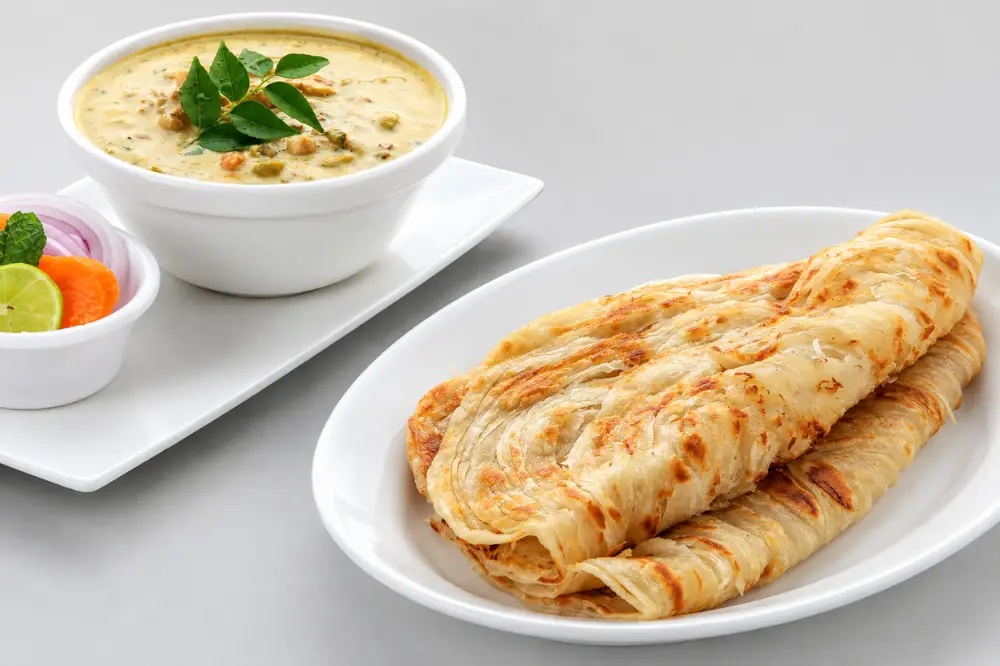
It is a round layered flatbread primarily made from refined wheat flour, water, salt and oil or ghee. It is also called Kerala parotta or porotta.
This bread is usually made from maida, unlike many North Indian parathas, which are made from whole-wheat flour. The dough is rolled very thin, brushed with oil, folded into layers and cooked on a hot tava.
The bread that results has a lightly crisp crust and a soft, chewy centre. Its thin layers separate easily.
It is often served with curries because the folds soak up gravy, but retain some of their texture.
The wider family of layered flatbreads includes several regional and modern variations such as
It is named after the Malabar region of northern Kerala, which was historically a centre of the Indian Ocean trade routes.
The word ‘parotta’ is related to the word ‘paratha’, though the two breads developed different methods of cooking and regional identities.
The bread is frequently called porotta in Malayalam. Malabar Parotta and Kerala Parotta are often used interchangeably.
But the name doesn’t say exactly where the bread was invented first. It has a history that spans many regions and culinary traditions.
There is no single, universally agreed-upon its origin story.
Its development is usually associated with trade along the coast of Kerala, the movement of people between southern India and Sri Lanka, and the growing availability of wheat flour.
These links could help explain the presence of similar layered flatbreads in other parts of Asia.
For centuries, the Malabar Coast had maintained trade links with Arab merchants and other West Asian communities.
These exchanges had an effect on the food culture of Kerala, particularly in the coastal region, where various ingredients and methods of cooking were incorporated into local traditions.
One theory holds that the techniques of layered flatbread travelled via these trading networks and were gradually adapted to local tastes.
But there is no hard evidence that connects one trading community as the inventor of the modern bread.
The history of Kerala parotta overlaps with layered breads in Tamil Nadu and Sri Lanka.
Sri Lankan Tamil cuisine includes veechu parotta, where the dough is stretched into thin sheets. Tamil Nadu also has preparations like Ceylon parotta and others.
Movement between these regions may have helped spread similar cooking techniques. This explains why the breads share certain features while differing in shape, folding methods and accompaniments.
For much of southern India, rice has long been the staple of diets.
Eating habits and the availability of flour changed, and wheat-based foods became more prevalent. Wartime rice shortages in the 1940s also led to greater use of wheat flour in parts of South India.
The spread of refined flour helped popularise layered flatbreads in pure South Indian restaurants and roadside eateries.
As time passed, the Parotta became a part of the everyday food culture of Kerala, especially as a partner to the rich curries.
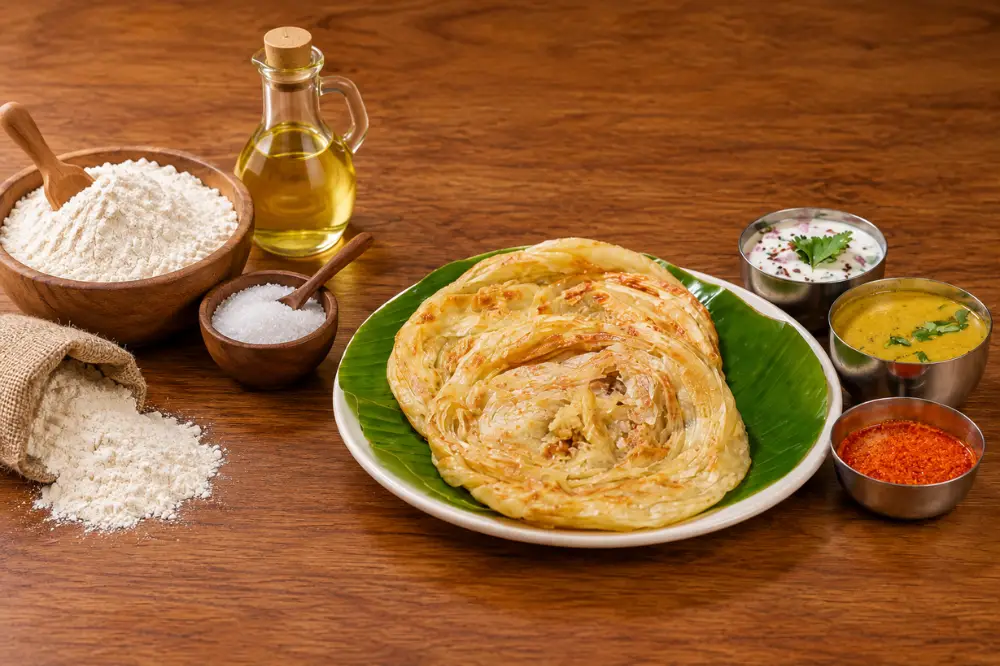
The recipe doesn’t require a lot of ingredients. But the proportions and the way the dough is handled do make a difference in the final texture.
The dough is made with refined wheat flour.
That’s what gives the dough that smooth, elastic consistency to stretch. And a dough that stretches easily can form the thin sheets that create the bread’s signature layers.
Oil is important when kneading, stretching, and cooking.
It prevents the thin sheets from sticking together when folded. Ghee can also be added for a richer aroma and flavour.
Water hydrates the flour and enables the dough to develop its elasticity. Salt is a seasoning. The dough should be soft enough to stretch without tearing.
Some recipes include additional ingredients:
These ingredients are optional and not essential to the layered structure of the bread. Especially at Sagar Ratna, we prepare all the dishes with 100% vegetarian ingredients only.
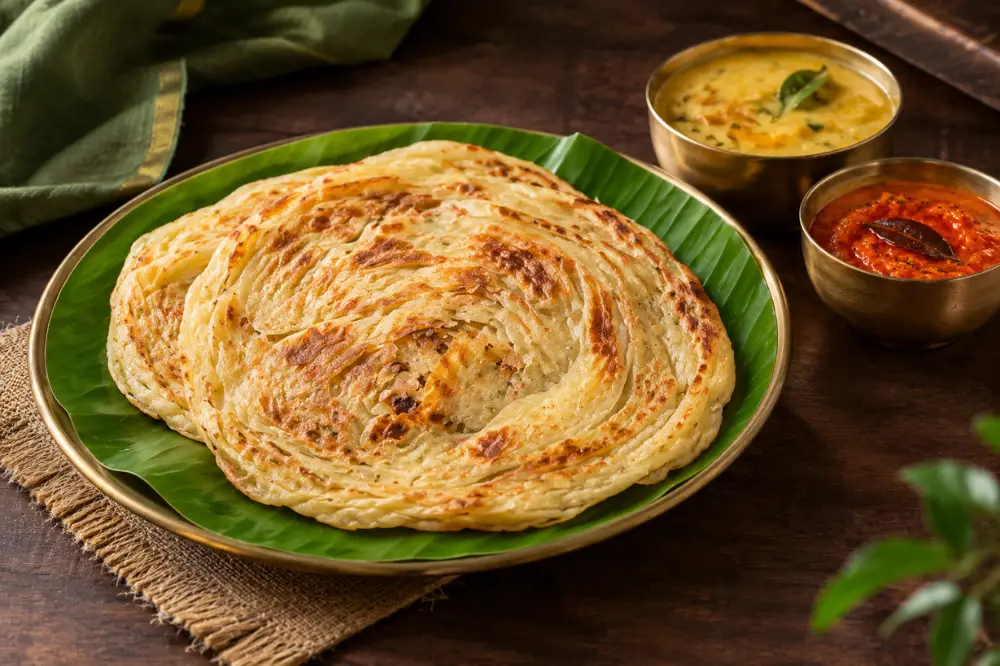
Parotta is a staple in the South Indian restaurant and street food culture of Kerala.
It is mostly made in the kitchens of roadside dhabas, local restaurants, and hotels. In many places, the customers can watch the cooks stretch out the dough, fold it, and cook the bread on a large griddle.
The prep is now a staple part of your dining experience.
Parotta is especially popular at evening meals when served hot with freshly made curries.
Its presence in South Indian cuisine is also indicative of how regional food traditions have adapted ingredients and cooking techniques brought in through cultural exchange.
Malabar Parotta is an expression of Kerala’s food culture with trade, migration and regional cooking traditions. Its distinctive layers are a result of a careful process of stretching, folding and cooking, while its mild flavour is a natural accompaniment to curries.
At Sagar Ratna we take pleasure in the variety of South Indian tastes and traditions. Visit our South Indian restaurant and explore our vegetarian menu for the regional favourites that make South Indian cuisine so diverse.
No, they are both in the wider family of Indian flatbreads. Malabar or Kerala Parotta is made of refined flour and uses the technique of stretching, folding and coiling to make thin layers. North Indian parathas are usually made from whole-wheat flour and can be plain or stuffed.
It is strongly associated with Kerala, more specifically the Malabar region. But its larger history also includes possible influences and connections from West Asia and Tamil Nadu and Sri Lanka. There is no generally accepted proof for one exact birthplace.
Not necessarily, as many recipes prepare the bread without egg. Some cooks include it to change the richness and softness of the dough. Anyone avoiding eggs should confirm the ingredients before ordering.
Malabar Parotta is a multi-layered flatbread that is generally served with curry. Kothu parotta is made from already cooked parotta, which is chopped and mixed with vegetables, spices and gravy. Some versions might also include egg or meat.
Yes, but the texture will be different from the traditional preparation. Whole-wheat flour contains bran, which makes it harder to stretch the dough into very thin sheets. The finished bread may therefore be denser and less flaky.

 Instagram
 Facebook
 Twitter