 India
India
 Netherlands
 Singapore


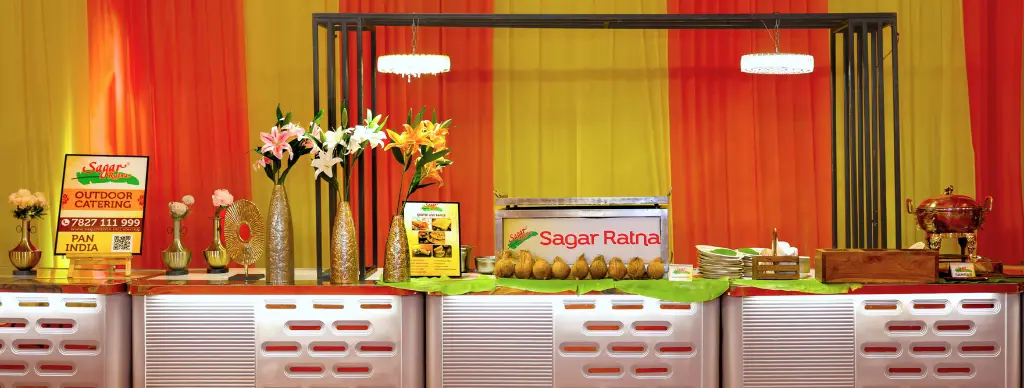
Catering Services for Parties & Family Celebrations in Delhi



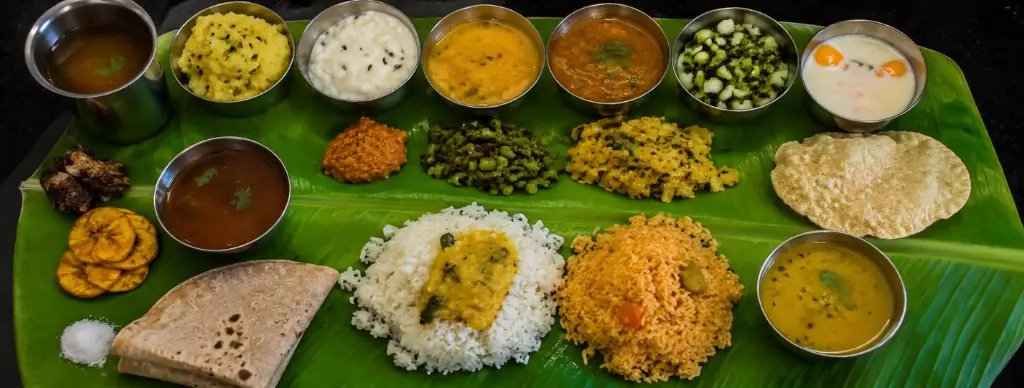
The South Indian thali is that kind of meal which looks quite simple, but gradually you discover how much thought was put into the Indian food traditions regarding balancing, comfort, variation, and everyday nutrition.
A thali is not just another plate of rice, curry, veggies, and side dishes, for each serving represents the essence of family-style dining and the skill of traditional cooking.
For many people, the thali will be their first real discovery of South Indian cuisine since it is very convenient to try several different dishes without being confused by the long menu.
This is why a renowned South Indian restaurant like Sagar Ratna tries to make thali not only a lunch choice but also an experience of food in its pure form.
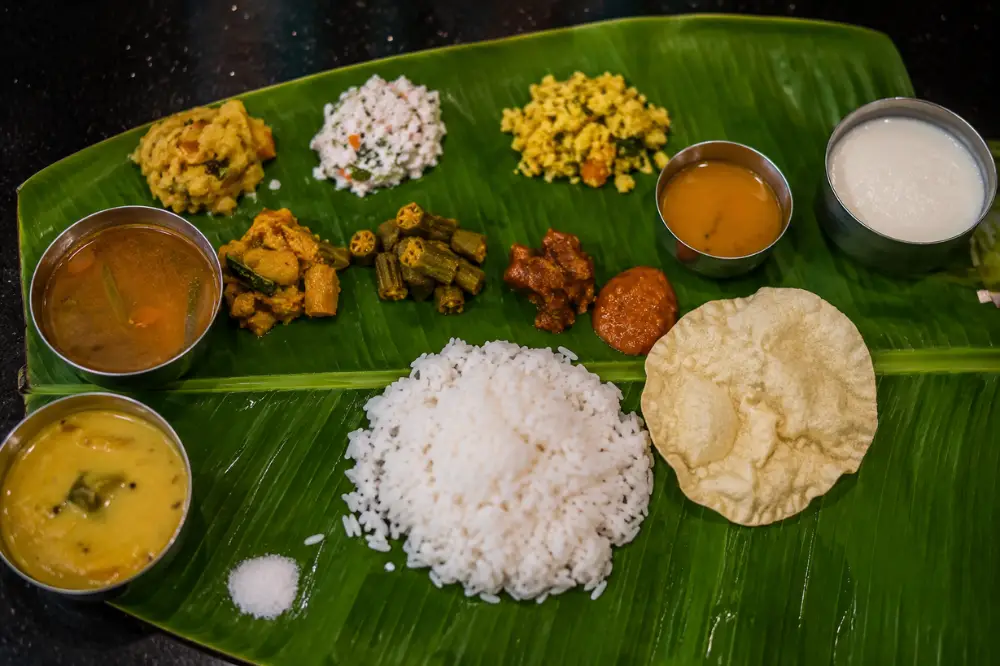
There is rice, dal, veggies, chutney, curd, pickles, papad, and sweet dishes served on the thali; however, its uniqueness is not only in the ingredients but also in the combination of the whole set.
The meal does not deliver one predominant taste but gradually transitions into tangy, spicy, creamy, earthy, crispy, cooling, and mildly sweet flavours.
It brings balance because each dish in little bowls complements the main meal and enriches it, making the experience unforgettable.
When prepared properly, the thali feels like a home-cooked meal with a variety of dishes eaten at once.
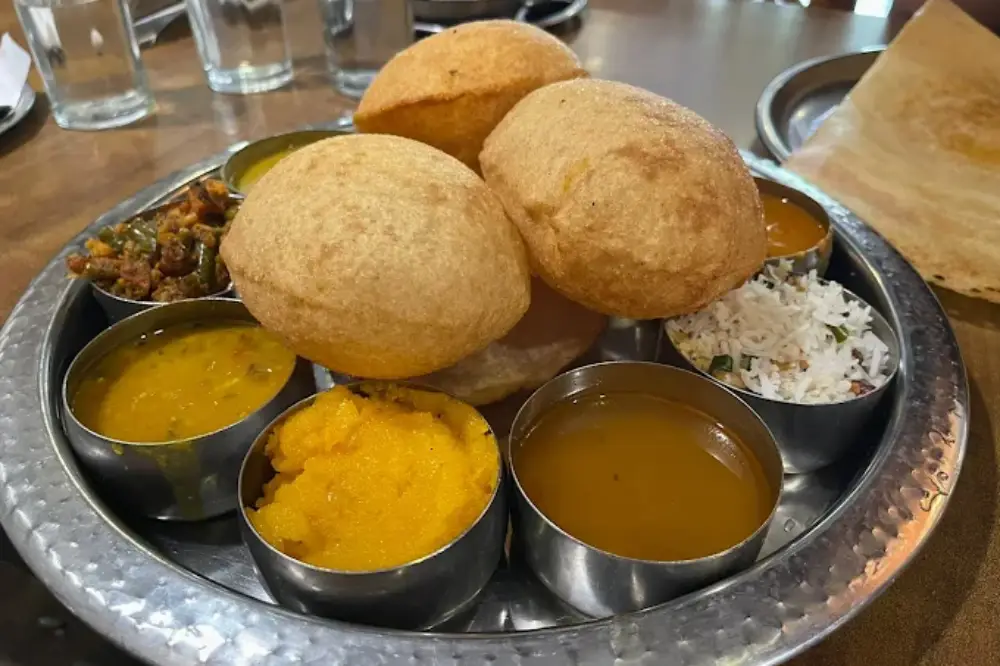
The word ‘thali’ refers to a plate; however, in Indian cuisine, it has evolved to describe a complete meal served with several dishes.
The concept of having a thali is derived from the old eating customs of India, where there was no single dominant dish in a meal.
In South India, this idea naturally took a rice-centred form because rice cultivation, lentils, coconut, tamarind, curry leaves, and seasonal vegetables shaped everyday eating habits.
Over time, temple meals, family feasts, wedding spreads, and festival lunches played their role in turning this regional eating pattern into a more recognised food tradition. The South Indian platter grew from these roots and evolved over time.
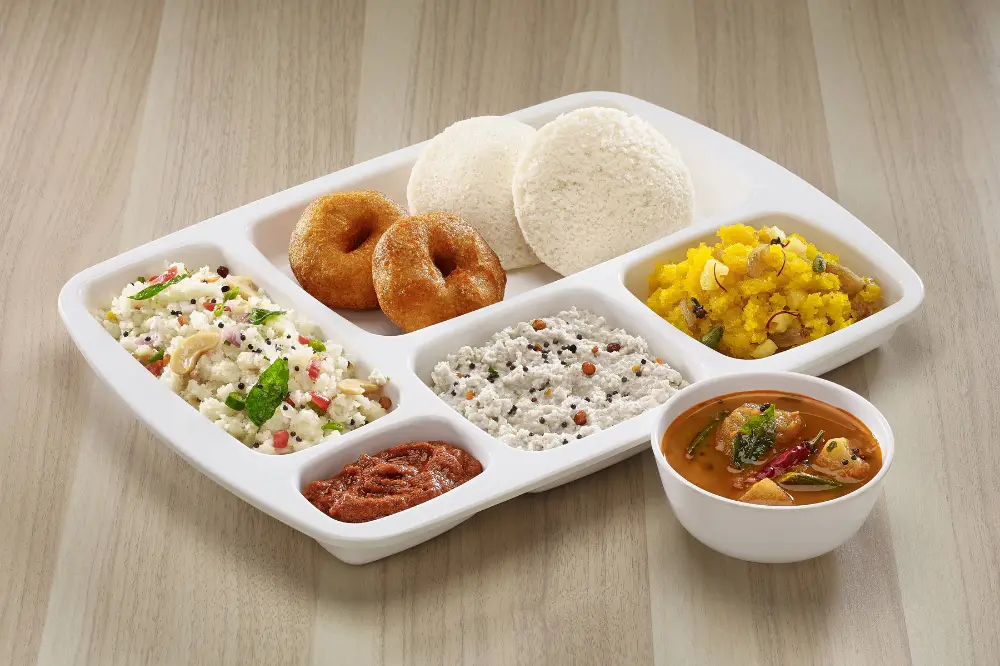
Earlier, thali-style meals were primarily limited to the home, temple, or other community occasions where food was cooked as per the season, rituals, availability, and traditions within a particular family.
With the development of urbanisation and the restaurant culture, restaurants started offering full meals on plates so that people could relish the regional flavours without having to order lots of separate dishes.
This helped in making the thali more popular among travellers, working individuals, students, families, or anyone who wants to have a fulfilling meal.
At Sagar Ratna, this has continued in terms of a restaurant-style service that is still attached to the sentimental value of the South Indian meal experience.
The format may look modern today, but the core idea remains beautifully old-fashioned in the best possible way.
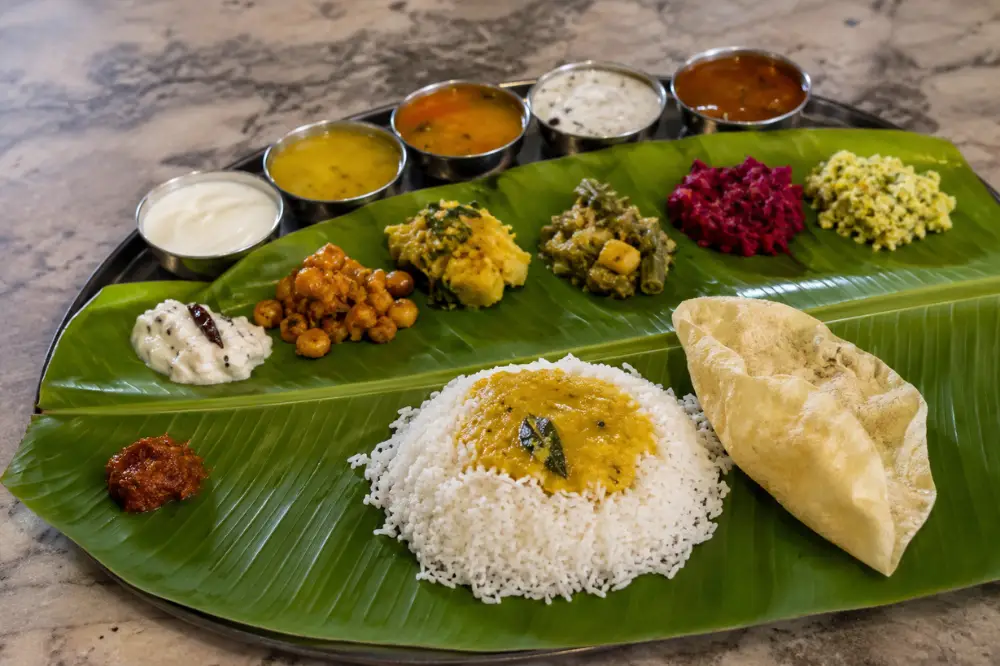
Each food item has a distinct role in flavour, digestion, texture, and overall nutritional balance:
Rice is the main ingredient, providing a tender background for sambar, rasam, curd, and other vegetable gravy.
The sambar dish is made up of pulses, vegetables, tamarind, and spices, making it among the most nutritious and easily identifiable dishes in South India.
The rasam is added as an extra flavouring to the thali, which is a little different and sharp from the sambar.
Vegetable side dishes like poriyal, kootu, avial, thoran, and palya provide the elements of fibre, colour, freshness, and locality to the thali.
Though the chutney and pickle portions might seem small, it is they that give a kick between bland and soft mouthfuls of food.
Curd or buttermilk acts to cool down the body from the spices consumed and provides the perfect conclusion to the thali experience.
Papadum provides texture while dessert dishes like payasam or kesari provide a sense of completion to the meal.
Meals in the Tamil Nadu tradition are composed of rice, sambar, rasam, kootu, poriyal, curd, pickle, papad and payasam in an effective manner.
The meals in this style are quite healthy and realistic, with plenty of use of tamarind, lentils, curry leaves and vegetables.
Kerala sadya is a delicious vegetarian meal served on a banana leaf, particularly during occasions like Onam, weddings, Vishu and other family functions.
Some dishes included in this type of meal are avial, olan, thoran, pachadi, banana chips, pickles, rice, sambar, rasam and various kinds of payasam.
The Karnataka style meal is a lot like comfort food, with rice, saaru, palya, kosambari, curd, and even sweets present.
This particular style proves that South Indian food does not have to be sharp in order to provide comfort.
The Andhra style meal tends to feature spicy elements, strong pickles, pappu, pulusu, pachadi, rice, curd, and vegetables.
This meal is good for people who enjoy spicy foods and a strong flavour.
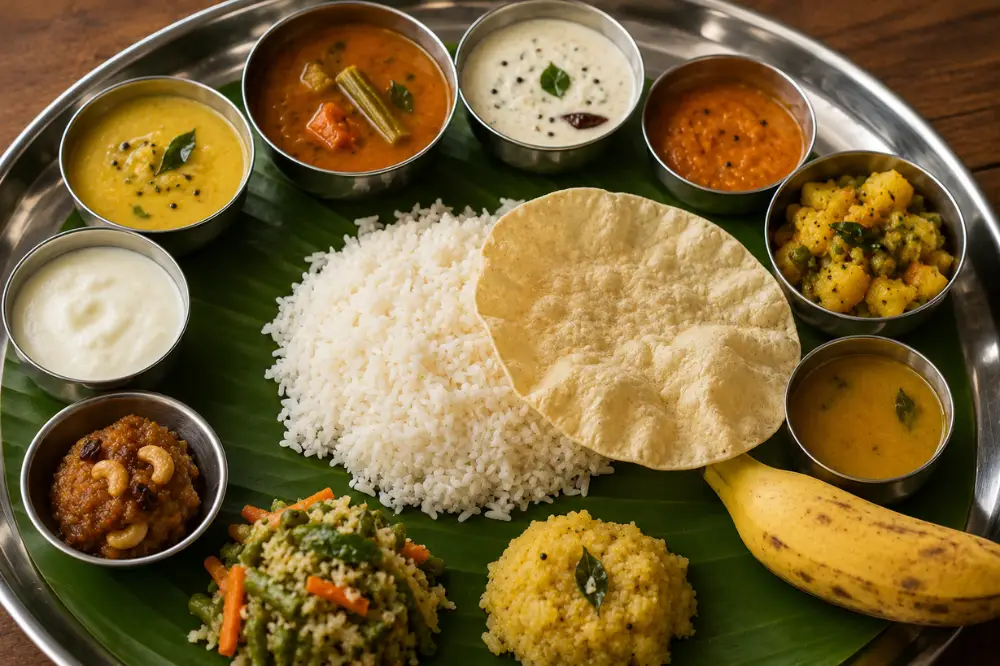
A South Indian platter is often considered balanced because it combines carbohydrates, protein, fibre, fats, probiotics, and micronutrients in aisle meal.
Rice provides sustained energy, lentils offer plant-based protein, vegetables provide fibre, and curd and buttermilk ensure digestive health.
Ghee and coconut oil offer richness but in measured amounts, and the inclusion of sour foods like rasam, curd, and tamarind dishes may support digestion.
With multiple vegetables and legumes, the high plant-food content in the thali also makes the meal naturally rich in fibre.
Our thali plating at Sagar Ratna works well for guests who want a filling vegetarian meal that still feels thoughtful, familiar, and varied.
A South Indian platter does not only consist of a plate with many dishes on it; it also embodies a history, a sense of regionality, balance, hospitality, and everyday Indian wisdom.
It is one of the most complete ways to experience South Indian cuisine through authentic flavours, familiar comfort, and thoughtful variety.
So the next time you visit a South Indian restaurant, choose a thali not just because it is filling but because it tells a whole food story in one meal.
It usually includes rice, sambar, rasam, vegetable dishes, chutney, pickle, papad, curd, and a sweet dish. The exact items may change based on the region, restaurant, and occasion. The thali is served as a complete vegetarian meal inspired by traditional South Indian cuisine.
It can be a balanced meal because it includes rice, lentils, vegetables, curd, and spices in one plate. It gives energy, protein, fibre, and gut-friendly elements when prepared with fresh ingredients. The variety also helps you enjoy a filling meal without depending on one heavy dish.
A classic vegetarian South Indian thali is a good choice for first-time diners because it gives a taste of sambar, rasam, vegetables, curd, papad, and sweets together. It helps you understand the flavours of South Indian cuisine without ordering many separate dishes. If you are visiting a South Indian restaurant, a thali is one of the easiest ways to explore the menu.
A South Indian platter is usually rice-centred and includes dishes like sambar, rasam, curd, chutney, and vegetable preparations. A North Indian thali often includes roti, dal, sabzi, rice, raita, and richer gravies. Both are complete meals, but their ingredients, spices, textures, and serving styles are different.
You can enjoy it at a trusted South Indian restaurant that serves fresh food with traditional flavours. Sagar Ratna is known for bringing the comfort and variety of South Indian food to diners through its vegetarian menu. Our thali is ideal when you want a complete, satisfying, and flavourful meal.

 Instagram
  Facebook
  Twitter