 India
India
 Netherlands
 Singapore


How Catering Services in Delhi NCR Create Memorable Experiences



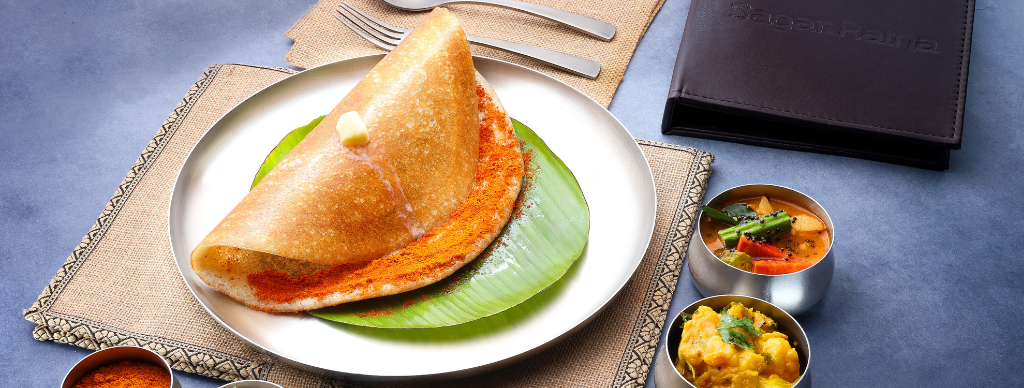
Despite its seemingly simple presentation at the dining table, the story behind the delicious golden crispness of dosa is one that is meticulous, patient, and rich with tradition.
At Sagar Ratna, our guests relish every bite of dosa with the traditional recipe and humble efforts of our expert chefs.
To understand why this much-loved dish is so important in South Indian cuisine, it is important to understand how dosa is made.
Let’s dive in.
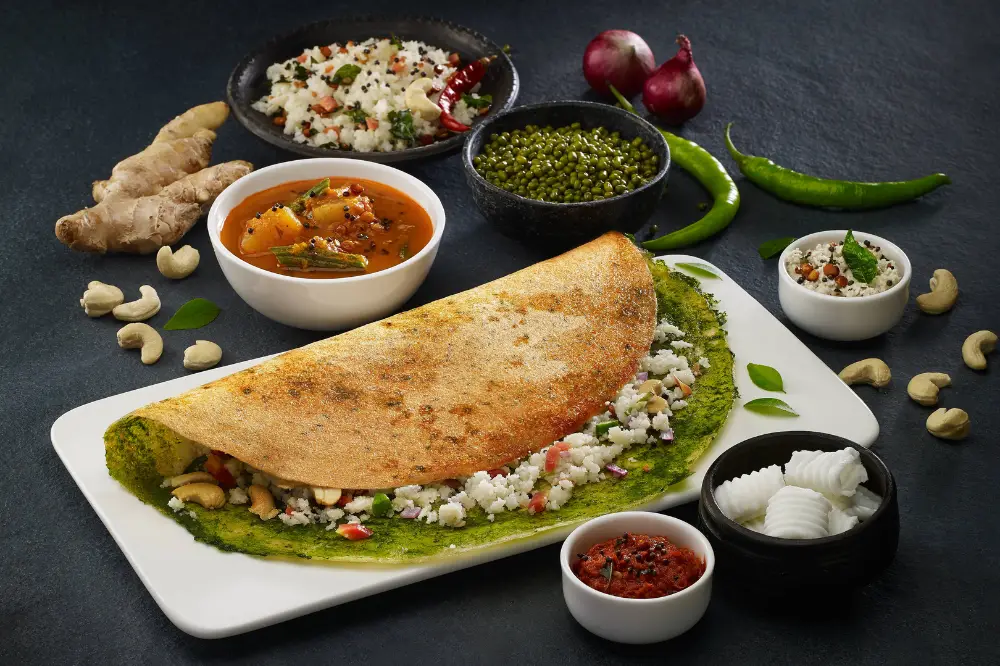
Dosa is a thin and fermented crepe-like South Indian cuisine that is traditionally prepared from batter using rice and urad dal, occasionally along with methi seeds or poha and other local ingredients.
The batter is spread on the tawa and fried until it gets crispy, golden, fragrant, and thin enough to be folded without any cracks.
While rice adds substance, structure, and crispiness to dosa, urad dal adds lightness and fermentation qualities.
Methi seeds are frequently used in smaller quantities as they help in fermentation and add to the quality of batter while frying.
That is why the preparation of dosa differs a little everywhere, from home kitchens to various regions, and in all authentic South Indian restaurants.
The first step of the dosa-making process starts with washing rice and urad dal and then soaking them separately for some time.
Soaking is essential since it helps the raw materials absorb sufficient water that enables grinding and fermentation.
Failure to soak the raw materials properly results in a lumpy or heavy batter.
When learning how a dosa is made, it is important to note that the prep stage is very important and must be followed as per the recipe.
Next, the soaked urad dal is ground into a smooth, airy paste that gives the batter a soft texture and natural lift.
The rice is then ground separately to a texture that is smooth enough to spread but slightly coarse enough to provide crispness.
When the two mixtures are mixed together, the batter should not be too thick or too watery to spread evenly.
If the batter is too thick, the dosa will be heavy, and if it is too thin, the dosa will break or lose its structure.
This is one of the most important steps in how dosa is made, as the grinding directly affects the texture, flavour and final look.
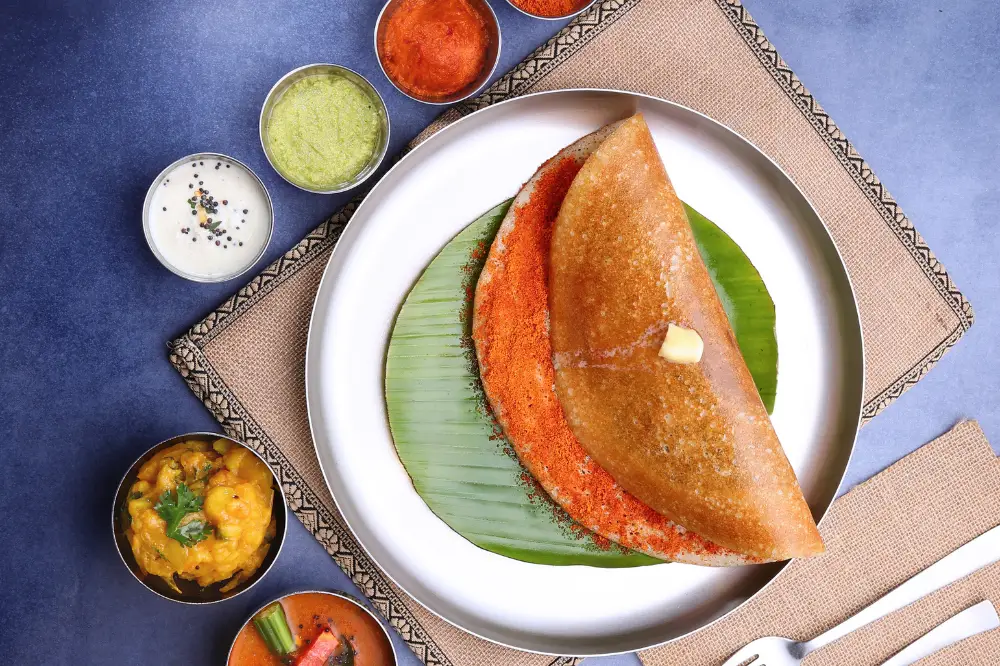
This process involves the conversion of simple ground rice and lentils into a live batter full of scent, tang, and lightness.
It is through this resting phase that the natural microbes produce acidity and lightness, providing dosa with its unique taste and digestibility.
Higher temperature speeds up fermentation, while low temperature requires patience and care during the process.
Properly fermented batter possesses a pleasant smell, a slight rise, and good spreading qualities.
At Sagar Ratna, much importance is given to the process of fermentation due to the fact that it significantly affects the quality of dosas.
Fermentation is not only about flavour for the dosa. It alters the texture of the batter when poured onto the tawa.
Fermentation creates air bubbles in the batter, enhances its liquidity, and assists in giving the dosa a light consistency.
It adds a subtle sour taste to counterbalance the starchy taste of the rice and add flavour to the end product.
In the absence of proper fermentation, even fresh ingredients may yield an insipid and bland dosa.
This is precisely why the dosa-making process is as much an art of patience as a recipe.
The tawa stage is where the skill comes in, because the same batter can behave very differently on different levels of heat.
The cook must judge the heat quickly, spread the batter smoothly, and handle the flame with confidence.
That’s where the experience at a South Indian restaurant comes in, because restaurant kitchens need to have quality across many orders.
The batter is then poured in the middle of the tawa and is spread rapidly in a circular manner.
This step decides whether the dosa is going to be thin, flat, crisp, soft, or slightly thicker according to the type of dosa being prepared. For example, Karnataka’s special benne dosa is generally prepared with a richer, softer texture and roasted with butter for its distinctive flavour.
Small amounts of oil and ghee are added around the borders to assist with the browning process and to get the crispy texture.
This step gives us a complete idea of why the dosa-making process cannot be simply explained by the ingredients used.
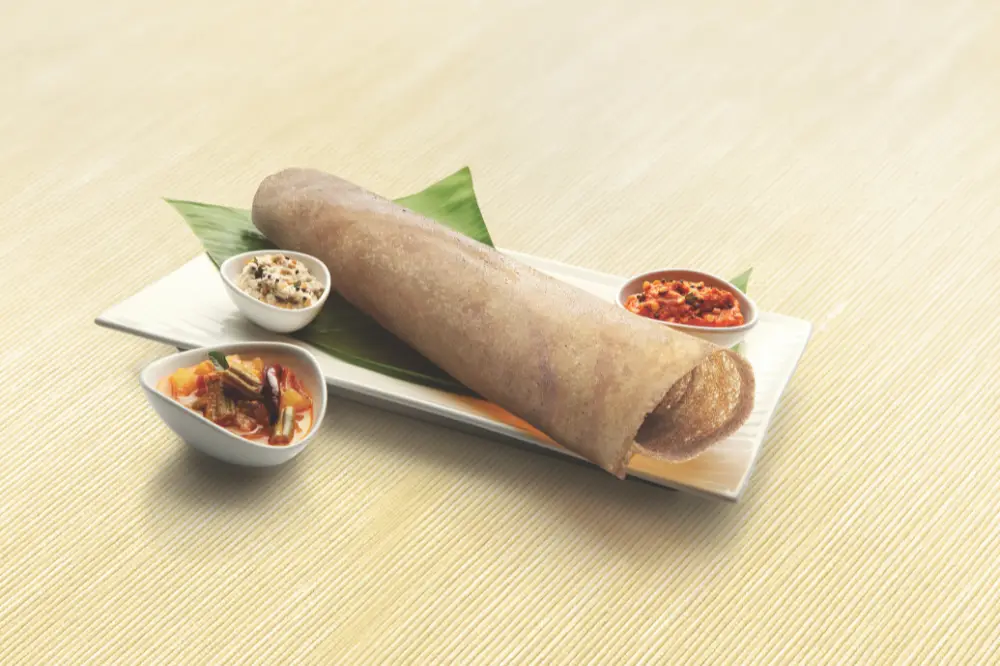
Dosa was not always the ultra-thin, crisp dish that many people today know it to be from restaurant menus.
It probably started as a little bit thicker fermented rice dish and evolved slowly over household traditions, regional kitchens, and changing cooking techniques.
As time passed, various communities created their own dosa styles, depending on the availability of ingredients, the local taste, and the cooking surfaces.
This resulted in various kinds that we know of today, such as plain dosa, rava dosa, paper dosa, masala dosa, benne dosa, onion dosa, and many more popular types of dosa. These differences reflect how South Indian cuisine is evolving, while still safeguarding its traditional flavour language.
A modern South Indian restaurant continues this evolution by serving familiar classics in a way that still honours the original method.
The process of creating such a dish involves ingredient selection, discipline in the creation of batter, hygiene, control of the fermentation process, consistency of the tawa, and speed of serving.
Different varieties may also require slight changes in preparation. A benne dosa, for instance, needs careful roasting and the right amount of butter to achieve its characteristic taste and texture.
For Sagar Ratna, the recipe is all about being traditional, fresh, and consistent.
The reason why there is no need to complicate the concept of dosa is that its true essence lies in following all the steps mentioned in this blog.
The expectations of people coming to a South Indian restaurant include having dosa that is fresh, crisp, balanced, and satisfying every single time.
Understanding how dosa is made helps us see why this dish deserves more appreciation than it usually receives.
Soaking, grinding, fermenting, roasting until crisp; every step contributes something vital to the final plate.
At Sagar Ratna, we consider dosa to be a simple dish, but there is a disciplined process behind it. Every day, shaped by tradition, quality and love for good food.
So next time you hear that soft crackle on the plate, you will know that the crispy perfection started long before the dosa touched the tawa.
One of the most crucial stages in making dosa is fermentation, during which the batter gets its flavour, texture, and fragrance. This is when microbes produce mild acidity and holes that help the dosa become airy and easy for digestion. Otherwise, the dosa will have no distinct flavour and texture.
Dosa batter usually needs several hours to ferment, depending on the weather, room temperature, and batter consistency. In warmer conditions, it may ferment faster, while cooler weather can slow the process down. Proper fermentation gives dosa its mild tang, light texture, and better cooking quality.
Traditional dosa is generally prepared with rice and urad dal, which are soaked, ground and fermented before cooking. Some recipes add methi seeds or poha for better fermentation and texture. These ingredients combine to form that special mix of crispness and softness which is characteristic of true South Indian cuisine.
Some of the most common problems are not soaking enough, wrong batter consistency, not fermenting enough and wrong tawa temperature. If the batter is too thick, the dosa will be heavy, and if too thin, it will tear up while cooking. Consistency is the key at every stage to get a perfectly cooked dosa with uniform texture and colour.
Well-controlled batter preparation, uniform fermentation and good tawa management often help a restaurant-style dosa. Even professional kitchens have strict standards for ingredient quality, cleanliness and cooking temperatures. At Sagar Ratna, we prepare every single dosa with age-old methods and quality assurance to serve you with the authentic tastes of South Indian food.

 Instagram
  Facebook
  Twitter