 India
India
 Netherlands
 Singapore



What Is Medu Vada? Everything You Need to Know



In This Blog
Curry leaves give identity to authentic South Indian cuisine. Without even tasting the food, you can easily guess what is on the stove. The fresh, unforgettable aroma of curry leaves gives it away.
When a dish is made without them, the benefits of curry leaves are easy to miss. Sambar feels flatter, chutney loses its lift, and even a simple tempering seems incomplete.
Hence, curry leaves are much more than a garnish. They bring aroma, balance, and depth to everyday South Indian dishes while also contributing useful nutrients.
In this blog, let’s explore why this humble leaf remains such an important part of traditional South Indian cooking.
The curry leaves resemble the neem leaves and are hence often called sweet neem, though they have no similarity in taste. Neem leaves are intensely bitter, while curry leaves have a citrusy, herbal and slightly nutty taste. Hence, curry leaves have many culinary uses, which have been an important part of south indian food culture for a long time.
Curry leaves come from a bush or tree botanically called Murraya koenigii and have many regional names in South India, such as Kadhi Patta (Hindi), Karuveppilai or Karivempu (Tamil), Karivepaku (Telugu), Karibevu (Kannada), and Kariveppila (Malayalam).
It is also to be noted that despite bearing a similarity in name, curry leaves have nothing to do with curry powder. Curry powder is simply a pre-mix of dried ground spices used to make a curry.
Curry leaves are usually added at the tempering stage, where the hot oil releases the aromatic compounds of the leaves, distributing the flavour all over dishes like lentils, vegetables, rice, chutneys and gravies (curries).
In authentic South Indian cuisine, they are essential. They rarely dominate a dish, but they make mustard seeds, tamarind, chillies, coconut and lentils taste as if they belong together.
The value of curry leaves in cooking is best understood by looking at the dishes they transform:
When curry leaves are tempered with mustard seeds and dried chillies, sambar tastes better. They enhance the flavour of pepper, cumin, tomato and tamarind in rasam, without covering up their individual flavours.
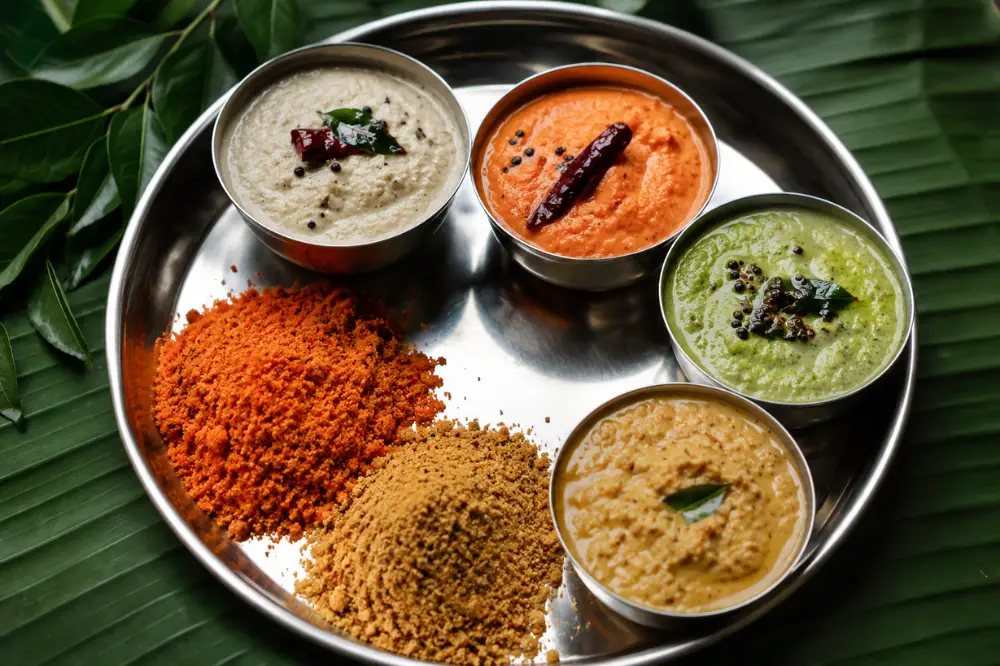
Curry leaves can be ground with coconut, roasted lentils, chillies, or tamarind. Curry leaf podi also encourages diners to eat the leaves instead of leaving them at the edge of the plate.
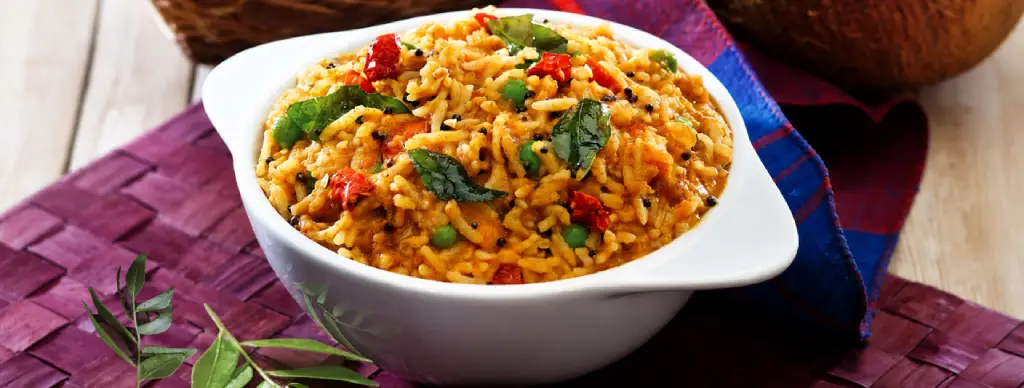
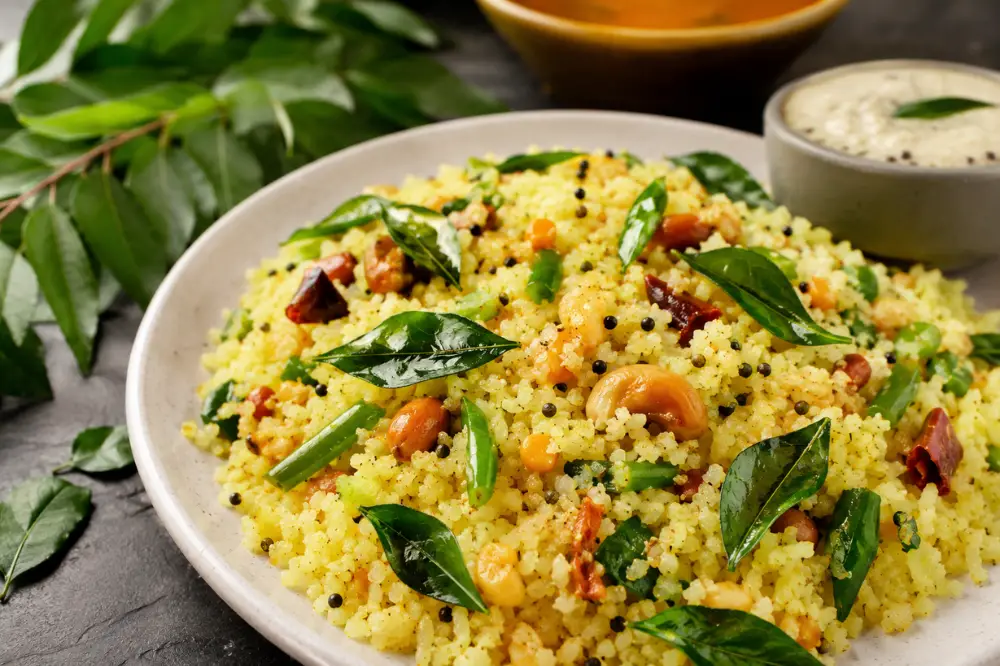
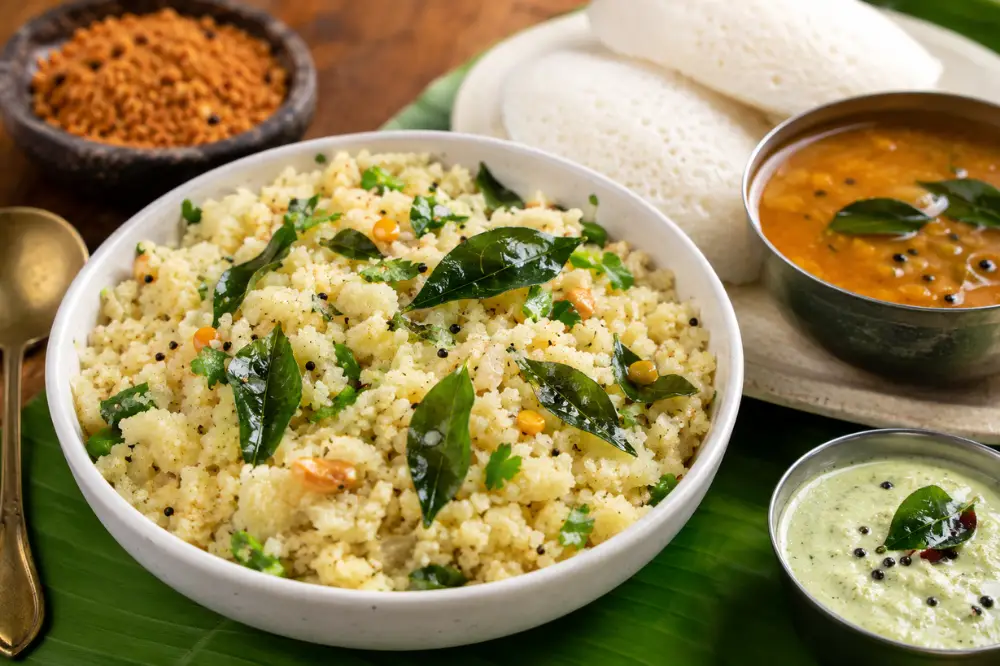
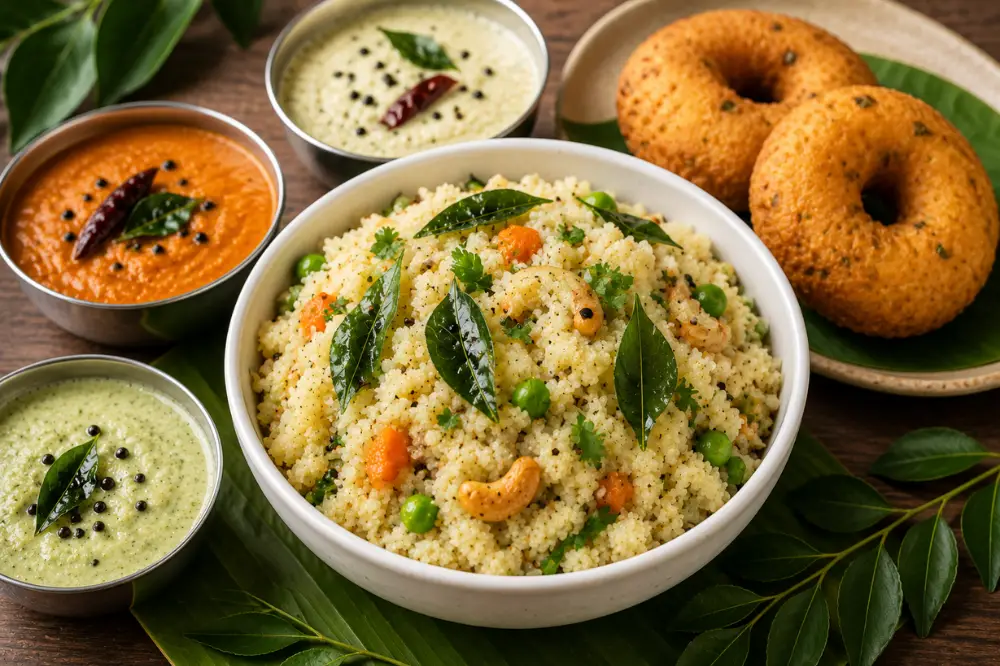
Curry leaves add freshness to lemon rice, curd rice, tamarind rice, upma and poha. Their aroma is in contrast to sour, mild or nutty flavours and lifts soft grains.
Poriyal and lightly sautéed vegetables add depth without complicating the recipe. This versatility means a South Indian restaurant can serve satisfying food made from vegetables, lentils, grains and thoughtful seasoning.
These familiar combinations at a South Indian restaurant show that one well-used ingredient can shape an entire meal.
Most health benefits of curry leaves are due to their nutritional and plant-compound profile. Since they are used in modest quantities, they should support a balanced diet rather than be treated as a major nutrient source.
Together, these components make curry leaves more than a flavouring ingredient. They add fragrance, plant-based nutrition, and functional value to authentic South Indian cuisine.
Curry leaves are valued for their traditional wellness uses as well as their role in everyday cooking. Their benefits are supportive and depend on regular use within a balanced diet.
These benefits make curry leaves a useful culinary herb, not a medical cure.
At Sagar Ratna restaurant, we believe traditional food can be nourishing without carrying exaggerated promises.
Many wellness sources associate curry leaves with vitamin A, iron, folate, eyesight, anaemia and weight loss. Carotenoids and minerals are present in leaves, but a diagnosed deficiency cannot be corrected by normal culinary amounts alone.
They also do not cause meaningful weight loss on their own. Their practical advantage is simpler: they add strong flavour without heaviness and work naturally in vegetable-rich, lentil-based meals.
That is one of the everyday benefits of curry leaves that people can appreciate without turning the ingredient into a miracle cure.
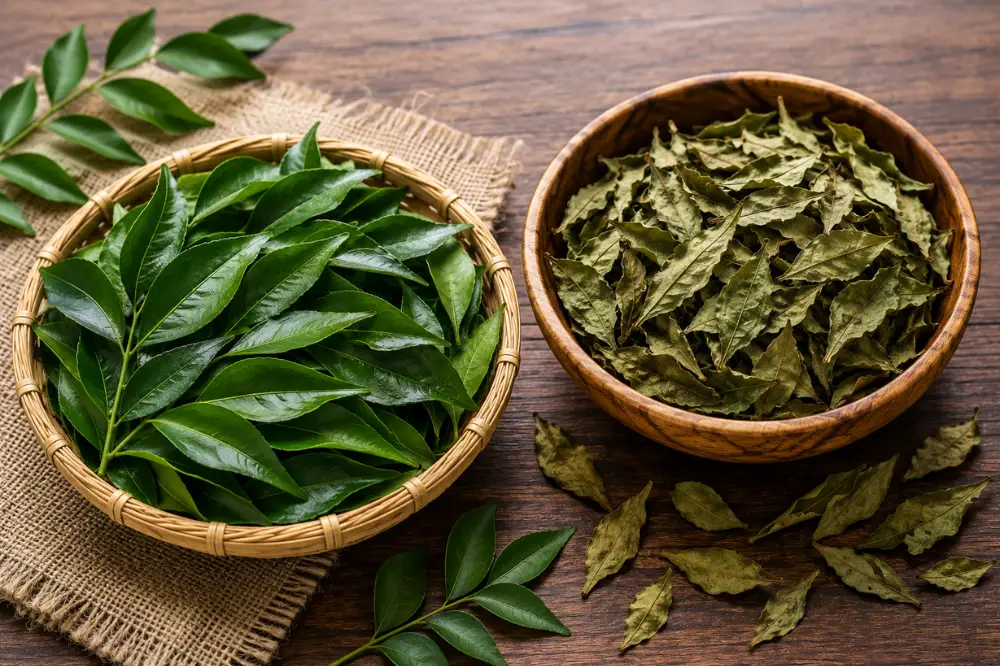
Fresh leaves usually offer a stronger fragrance and a clearer citrus-herbal character. Choose green, glossy leaves and avoid sprigs that look yellow, brittle, or heavily spotted.
Dried leaves remain useful in podi and seasoning mixes, although their aroma is generally softer.
For best results when cooking with curry leaves:
If you want to eat the leaves, you can grind them and make chutney or podi. Handle fresh sprigs gently to maintain their fragrance.
The benefits of curry leaves go beyond one nutrient or wellness claim. Their biggest strength is the way they bring aroma, balance, versatility and cultural identity to everyday food.
As a South Indian restaurant, we celebrate these nuances with the thoughtfully prepared dishes that are based on familiar South Indian traditions. Visit your nearest Sagar Ratna restaurant outlet and discover the aroma of curry leaves as they should be: not as decoration but as a vital ingredient in authentic South Indian cuisine.
Yes, curry leaves can be included regularly in everyday meals through sambar, rasam, chutneys, rice dishes and vegetable preparations. Eating them as part of a balanced diet allows you to enjoy the flavour and nutritional benefits of curry leaves without treating them as a medicine or supplement.
Curry leaves may support digestion, provide antioxidants, and contribute small amounts of fibre, iron, calcium, and vitamins. They may also support normal vision, heart health, blood sugar balance, and healthy hair and skin when included regularly in a balanced diet.
Curry leaves release a fresh citrus-herbal aroma when tempered in hot oil. They help balance ingredients such as mustard seeds, tamarind, coconut, chillies and lentils. At Sagar Ratna restaurant, curry leaves are used as a vital ingredient in familiar dishes that reflect the depth and character expected from a traditional South Indian restaurant.
Dried curry leaves retain some flavour and plant compounds, but fresh leaves usually offer a stronger aroma and livelier citrus-herbal taste. Dried leaves work well in podi, spice blends and seasoning mixes, while fresh leaves are better suited to tempering.
Curry leaves are generally safe when eaten in normal food quantities. Consuming unusually large amounts may cause digestive discomfort in some people. Anyone taking medication for blood sugar or another medical condition should seek professional advice before using concentrated curry leaf extracts.

 Instagram
  Facebook
  Twitter