 India
India
 Netherlands
 Singapore


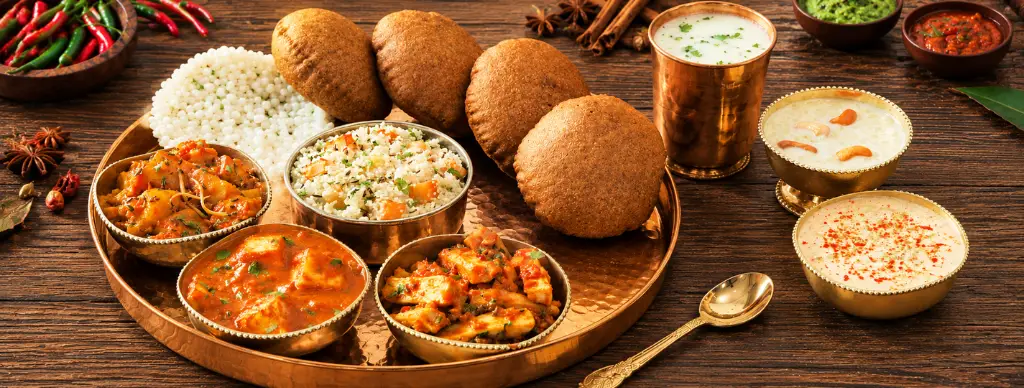
Looking for a Navratri Thali? Try Sagar Ratna’s Special Festive Feast



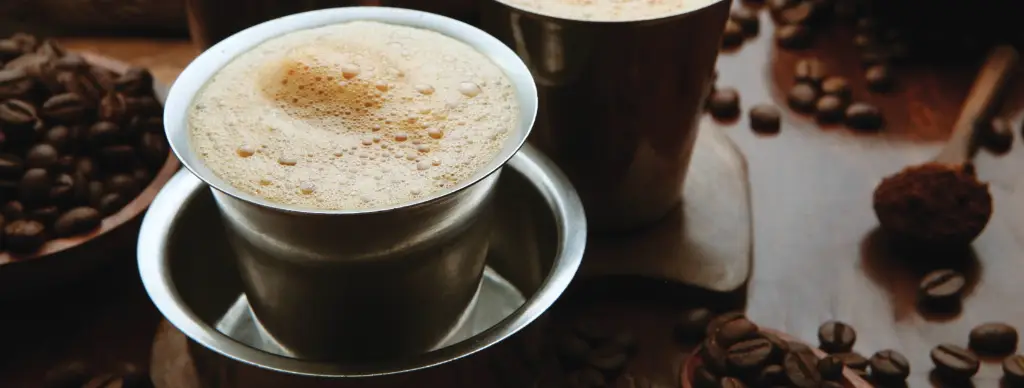
Designed to wake you up, South Indian filter coffee is the best option. What makes the drink appealing is the strong decoction of coffee, hot milk, a fixed amount of sugar, and the unmistakable froth that is made before serving.
But the drink is special for another reason. It’s very much part of everyday South Indian food culture, where coffee is as much about the familiar ritual as the brew itself.
Haven’t had the famous filter coffee before? Try it today at Sagar Ratna.
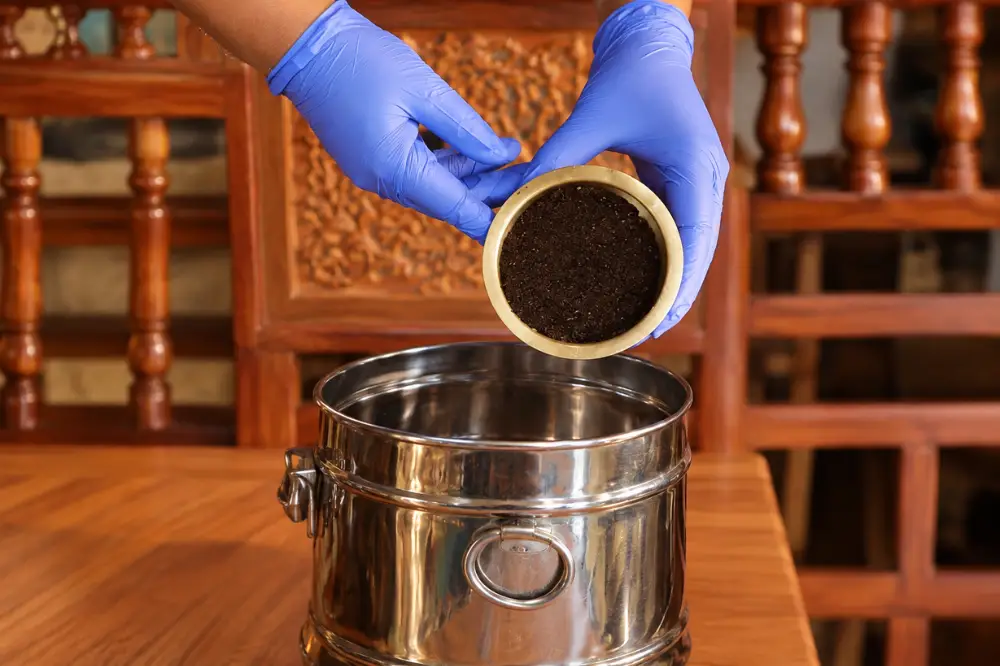
The biggest difference lies in the brewing. Instant coffee dissolves directly in water or milk. Traditional filter coffee, or kaapi, takes time. Finely ground coffee is placed in a metal filter, and hot water is slowly passed through it to create a concentrated liquid (decoction) in the lower chamber. The result is not a ready-to-drink cup of coffee but a richer decoction that forms the base of the drink.
This slow extraction is one reason the flavour feels different from instant coffee. The final strength can also be adjusted by changing the proportion of decoction and milk.
Chicory is also blended into many traditional blends. It adds body and a more profound, slightly earthy character to the finished cup. Coffee-chicory blends have a long tradition in India and are strongly associated with the familiar taste of traditional filter coffee.
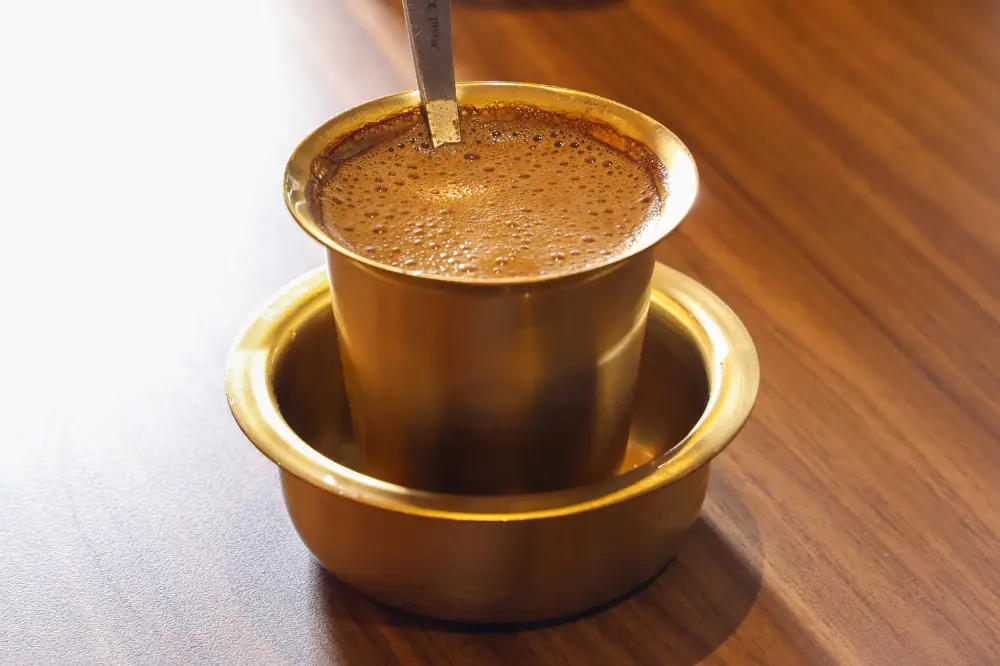
Presentation is part of the experience. Traditionally, coffee is served in a wider bowl-like vessel called a davara in which a stainless steel tumbler is placed. Pouring the coffee from one cup to the other helps to mix the milk, sugar, and decoction and, at the same time, cools a very hot cup of coffee before drinking.
That familiar froth on top is made by the movement. More importantly, the tumbler and davara have become visual symbols of the drink itself.
At Sagar Ratna, we pay attention to these minute details, for a traditional meal is made up of more than what goes on the plate. When we serve filter coffee with the familiar favourites of South India, the preparation and presentation are still a big part of the experience.
For most healthy adults, moderate coffee consumption fits within a healthy diet. But it’s not just what’s in the cup; it’s how much you consume.
Here are a few things worth considering:
Ultimately, it depends on the preparation, portion size, and individual dietary needs. A traditionally brewed cup enjoyed in moderation, particularly without excessive sugar, can be a perfectly reasonable part of an everyday diet.
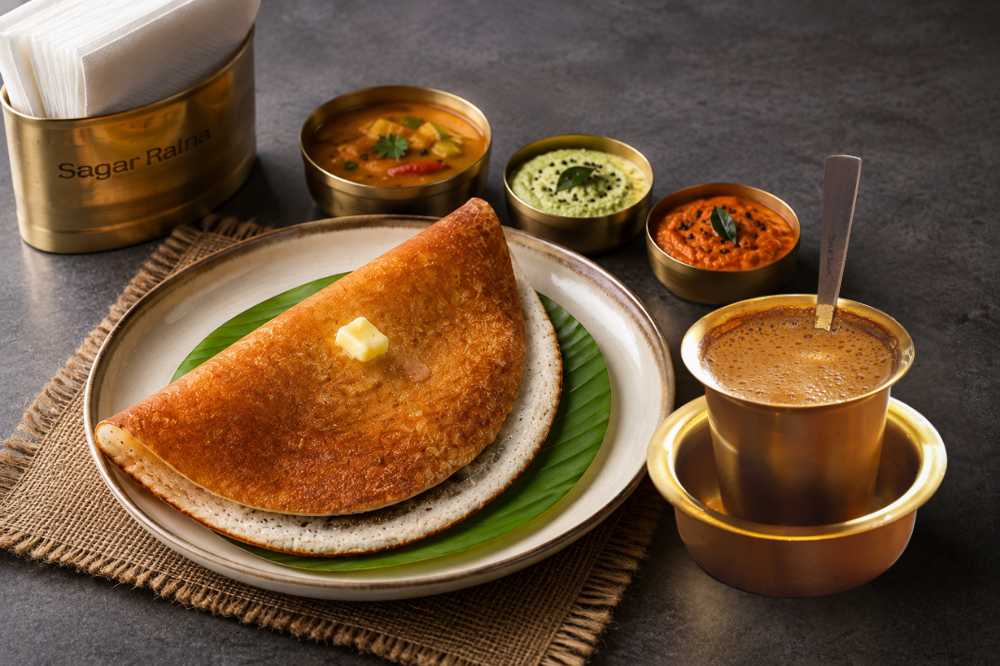
A traditional South Indian restaurant serving filter coffee with rava dosa, masala dosa, idli, medu vada, uttapam, or upma. It is also good at the end of a big meal when people want something warm and aromatic before they get up from the table.
You don’t have to overthink the pairing. A buttered or crisp dosa offers a richer counterpoint to the coffee, while softer dishes such as idli are a gentler combination.
Coffee becomes even more interesting when something good is on the plate with it. Its combination with benne dosa works quite well as the two bring contrasting flavours and textures to the table.
At Sagar Ratna, where Benne dosa is one of the regional favourites that we serve, pairing it with filter coffee feels less like an invented pairing and more like two familiar flavours naturally meeting at the same table. If you like a richer dosa, the combination with benne dosa is especially recommended.
This is also how we like diners to experience filter coffee at Sagar Ratna: not as an isolated item, but as something that belongs naturally alongside the South Indian food they have come to enjoy.
Amid the horde of insane coffee varieties in the market, the conventional South Indian filter coffee has still managed to survive because it offers authenticity and not just caffeine. The brewing, the aroma, the froth, the tumbler, and the accompanying food; it all adds up to an experience woven into everyday meals and conversations for generations.
This association with food is what makes filter coffee special for us at Sagar Ratna. Being a South Indian restaurant, we are built around familiar favourites like dosas, idlis, vadas, and regional specialities, and believe a freshly prepared cup is a natural way to complete the meal.
The next time you dine with us, leave a little room after the last bite. A warm, frothy filter coffee might be exactly how the meal should end.
South Indian filter coffee is traditionally made from finely ground coffee, sometimes with chicory added. The right ratio depends on how strong, aromatic, and full-bodied you like your coffee.
South Indian filter coffee can be brewed in a traditional metal filter. If you don’t have one, you can brew a strong coffee using another slow-drip method. Nevertheless, the concentrated decoction of the original preparation is more easily obtained with the traditional filter.
Filter coffee naturally complements dishes such as dosa, idli, vada, and uttapam. At a South Indian restaurant, it can be enjoyed alongside breakfast, after a full meal, or simply as a warm drink on its own.
The reason the combination with benne dosa works is that strong aromatic coffee goes well with the rich buttery flavour of the dosa. The combination of a warm, frothy coffee and a crisp-yet-soft benne dosa is also especially satisfying.
We serve filter coffee at Sagar Ratna as part of the bigger South Indian experience. Pair it with your favourite dosa, idli, vada, or another familiar dish and enjoy the coffee in the context in which it is most at home.

 Instagram
  Facebook
  Twitter